Working Memory
Size Order Memory Test
Also called: size judgment span
Measure working memory by putting lists of animal and food pictures in order of real-life size, from smallest to largest.
6-10 minUntimed
Free to start: 10 free participants per account, then $0.99 per participant for academic research, or any yearly plan. Preview any test free after you sign up.
- Papers, 2021 to 2025
- 76
- Evidence grade
- B
- Registered clinical studies
- 161
 One picture at a time

What it measures
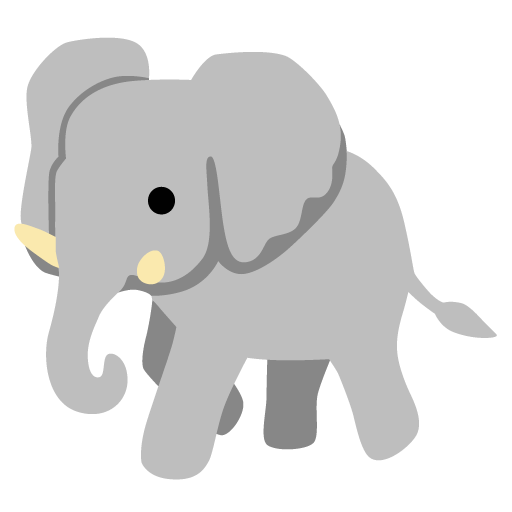
Measures working memory with pictures of animals and foods. Participants see each list one picture at a time, then tap the pictures from smallest to largest in real life.
Constructs
- Working memory
- Mental reordering
- Semantic knowledge of size
- Sequencing
Research uses
- Aging and cognitive change studies
- Working memory research in clinical groups
- Individual-difference studies of working memory
How the paradigm works
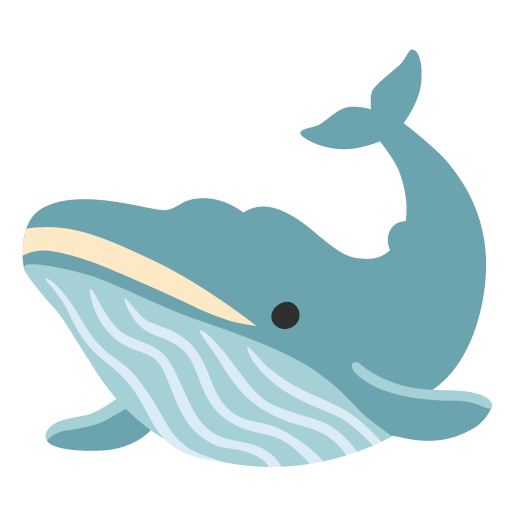
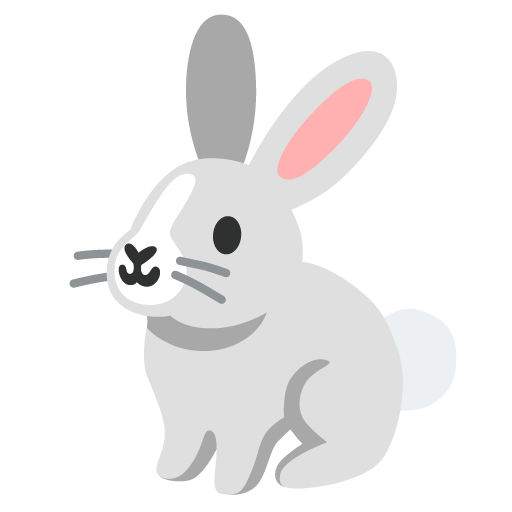
The size order memory task measures working memory: holding a short list in mind and putting it in a new order. Pictures of animals and foods appear one at a time at the center of the screen. They then come back in a grid with other pictures, and the participant taps the pictures from the list in order of real-life size, from smallest to largest. Seeing a whale, a bee and a rabbit, the answer is bee, rabbit, whale.
More about the paradigm
The task follows the picture ordering task of Tulsky and colleagues (2013, 2014) and the size judgment span (Cherry and colleagues 2007; Elliott and colleagues 2011), in which people hear everyday objects and animals and recall them from smallest to largest. Part 1 keeps to one category per list, animals or foods. Part 2 mixes the two: the foods come first, then the animals, each from smallest to largest. Lists grow from 2 to 7 pictures, with two lists at each length, and each picture stays for 2 seconds with no gap. A part stops after both lists at a length are wrong. Each part opens with a practice list of 2 pictures and one of 3, with the right order shown after each. Settings change the longest list from 5 to 8 pictures, the time per picture from 1 to 3 seconds and the other pictures on the answer screen from 2 to 6, and turn part 2 off. Answers are untimed, and Undo takes back the last tap.
Every list is drawn from the session's seed. The 36 pictures are Noto Emoji: 20 animals ranked by typical adult body length and 16 foods ranked by the typical width of one whole item. Two pictures of one category in a list always sit at least two ranks apart, which is at least 1.3 times the size, so each list has one right answer. The order shown never matches the answer.
The source tasks use spoken items and spoken answers. Here nothing is spoken and the answer is tapped from a grid with other pictures, so scores are not comparable with theirs.
The main score is the number of lists given back in exactly the right order, 0 to 24 at the standard settings. The longest list right in each part, the pictures in a right position, the other pictures picked and the time per list are also reported. Scores support research and do not diagnose.
Scores
- Lists Correctcount
- Lists given back in exactly the right order, over both parts (0 to 24 at the standard settings).
- Higher is better
- Lists Correct, Part 1count
- Lists of one category given back in exactly the right order (0 to 12 at the standard settings).
- Higher is better
- Lists Correct, Part 2count
- Mixed lists given back in exactly the right order (0 to 12 at the standard settings). Null when part 2 is turned off.
- Higher is better
- Longest List, Part 1count
- The longest list, in pictures, given back correctly at least once in part 1 (0 when none was).
- Higher is better
- Longest List, Part 2count
- The longest list, in pictures, given back correctly at least once in part 2 (0 when none was). Null when part 2 is turned off.
- Higher is better
- Pictures in Positioncount
- Pictures in a right position, over all lists.
- Higher is better
- Other Pictures Pickedcount
- Pictures left in an answer that were not in the list, over all lists.
- Lower is better
- Median Time per Listms
- Median time on the answer screen per list, leaving out times under 100 ms.
- Informational
- Anticipationscount
- Lists answered in under 100 ms.
- Lower is better
- Lists Givencount
- Test lists given before the task ended (24 at the standard settings when no part stops early).
- Informational
- Practices Finishedcount
- Parts whose practice lists were all answered. Feeds the quality rule.
- Informational
- Parts Plannedcount
- Parts in the session's settings: 2 at the standard settings.
- Informational
- Parts Startedcount
- Parts whose two lists of 2 pictures were answered. Feeds the quality rule.
- Informational
- 2-Picture Lists Correctcount
- Lists of 2 pictures given back correctly, over both parts. Feeds the quality rule.
- Higher is better
Use and evidence
76 papers from 2021 to 2025 name this task in their title or abstract, up 124% compared with 2016 to 2020. That ranks it 213 of 395 test families in our census. See the counts for every test.
Show the numbers
| Year | Papers |
|---|---|
| 2025 | 22 |
| 2024 | 22 |
| 2023 | 20 |
| 2022 | 5 |
| 2021 | 7 |
| 2020 | 12 |
| 2019 | 8 |
| 2018 | 6 |
| 2017 | 4 |
| 2016 | 4 |
| 2015 | 2 |
| 2014 | 2 |
| 2013 | 1 |
| 2012 | 0 |
| 2011 | 0 |
| 2010 | 0 |
| 2009 | 0 |
| 2008 | 0 |
| 2007 | 0 |
| 2006 | 0 |
| 2005 | 0 |
| 2004 | 0 |
| 2003 | 0 |
| 2002 | 0 |
| 2001 | 0 |
| 2000 | 0 |
Use grade D
30 to 99 papers from 2021 to 2025.
Evidence grade B
At least 8 test-retest papers, and either 5 registered clinical studies or 150 reliability or validity papers.
- Papers on test-retest reliability
- 8
- Papers on reliability or validity
- 29
- Registered clinical studies using it as an outcome
- 161
How the grades work
Use: A is 1,000 or more papers from 2021 to 2025, B 300 to 999, C 100 to 299, D 30 to 99 and E fewer than 30. Evidence: A means at least 25 papers report its test-retest reliability and at least 25 registered clinical studies use it as an outcome; B, at least 8 test-retest papers, and either 5 registered clinical studies or 150 reliability or validity papers; C, at least 2 test-retest papers, 30 reliability or validity papers or 3 registered clinical studies; D, little published measurement evidence found. The counts measure use. They include every paper that names the task in its title or abstract. Grades describe the published research on this task, not ConductCognition's version of it.
Source: ConductCognition test census 0.14.0, counted 31 October 2026 from OpenAlex and ClinicalTrials.gov.
Task design
The trial sequence as the test runs in ConductCognition.
- Pictures
- 36 Noto Emoji pictures: 20 animals ranked by typical adult body length and 16 foods ranked by the typical width of one whole item.
- Lists
- 2 to 7 pictures (standard; longest list 5 to 8), with 2 lists at each length, shortest first. Two pictures of one category in a list sit at least 2 ranks apart.
- Display
- One picture at a time at the center of the screen for 2 seconds (standard; 1 to 3), with no gap. A fixation cross shows for 1,000 ms before each list.
- Answer
- The list comes back in a shuffled grid with 4 other pictures (standard; 2 to 6). The participant taps the list's pictures in order, and Undo takes back the last tap. Untimed.
- Parts
- Part 1 keeps to one category per list. Part 2 mixes both and asks for the foods first, then the animals, each from smallest to largest (standard; can be turned off).
- Stop rule
- A part stops after both lists at a length are wrong.
- Practice
- Lists of 2 and 3 pictures before each part, each followed by the right order.
The source tasks use spoken items and spoken answers. Here nothing is spoken and the answer is tapped from a grid with other pictures, so scores are not comparable with theirs. No published norms are applied.
Quality checks
Each session is marked valid, needs review or invalid, with the reason, before you see its scores.
Scored rows: test-phase lists of the scored run, one per list. Every planned practice must be finished and the first length must be attempted in every part, or the session is invalid. Fewer 2-picture lists right than parts planned flags the session and withholds its percentile. A hidden tab withholds the percentile.
Why these rules
A list of 2 pictures is the easy end of the task and comes right after a practice with feedback, so a session without any of it did not show that the rule was understood. A floor score can still be a real result, so low scores are only flagged. A chance answer on a grid with foils is rare but has no fixed level across lists, so accuracy is not judged against chance. A hidden tab lets the study, delay or response timers run without the participant, so a percentile is withheld after one.
Running this test
Settings you can change
| Setting | Standard | Allowed |
|---|---|---|
| Longest list | 7 | 5 to 8 |
| Time per picture (seconds) | 2 | 1 to 3 |
| Other pictures on the answer screen | 4 | 2 to 6 |
| Include the second part | On | On or off |
Yearly plans can change settings within these limits. Free and pay-as-you-go studies use the standard settings.
Need a setting this test does not have?
Devices and languages
- Untimed test: runs on desktops, laptops, tablets and phones. Participant devices
- Languages: English, Spanish, French, German, Italian, Portuguese (Brazil), Chinese (Simplified) and Japanese.
- Available on: Every plan, including the free plan.
- Recruiting online? See the setup guides for Prolific, Sona Systems, CloudResearch Connect and Qualtrics.
Cite and describe
Participants completed the Size Order Memory Test in a web browser (ConductCognition task version 1.0.0, scoring version 1.0.0; Tulsky et al. (2013; Cherry et al., 2007), with the standard settings (longest list: 7; time per picture (seconds): 2; other pictures on the answer screen: 4; include the second part: On). The main score was lists correct (lists given back in exactly the right order, over both parts (0 to 24 at the standard settings)).
ConductCognition versions: task version 1.0.0, scoring version 1.0.0. Every export records the versions each session used, for a methods section.
- Tulsky, D. S., Carlozzi, N., Chiaravalloti, N. D., Beaumont, J. L., Kisala, P. A., Mungas, D., Conway, K., & Gershon, R. (2014). Journal of the International Neuropsychological Society, 20(6), 599-610. https://doi.org/10.1017/S135561771400040XThe display time, list lengths and stop rule.
- Tulsky, D. S., Carlozzi, N. E., Chevalier, N., Espy, K. A., Beaumont, J. L., & Mungas, D. (2013). Monographs of the Society for Research in Child Development, 78(4), 70-87. https://doi.org/10.1111/mono.12035The two parts and the practice lists.
- Cherry, K. E., Elliott, E. M., & Reese, C. M. (2007). Age and individual differences in working memory: The size judgment span task. The Journal of General Psychology, 134(1), 43-65. https://doi.org/10.3200/GENP.134.1.43-65The same idea with spoken words.
- Elliott, E. M., Cherry, K. E., Brown, J. S., Smitherman, E. A., Jazwinski, S. M., Yu, Q., & Volaufova, J. (2011). Working memory in the oldest-old: Evidence from output serial position curves. Memory & Cognition, 39(8), 1423-1434. https://doi.org/10.3758/s13421-011-0119-7Size-ordered recall from middle age to 90 years and over.
- Baddeley, A. (2003). Working memory: Looking back and looking forward. Nature Reviews Neuroscience, 4(10), 829-839. https://doi.org/10.1038/nrn1201Working memory as holding information and working on it.
Source papers
- Tulsky DS, Carlozzi N, Chiaravalloti ND, Beaumont JL, Kisala PA, Mungas D, Conway K, Gershon R (2014). Journal of the International Neuropsychological Society, 20(6):599-610. doi:10.1017/S135561771400040XParadigm source, Adults
- Tulsky DS, Carlozzi NE, Chevalier N, Espy KA, Beaumont JL, Mungas D (2013). Monographs of the Society for Research in Child Development, 78(4):70-87. doi:10.1111/mono.12035Paradigm source, Children and adults
- Cherry KE, Elliott EM, Reese CM (2007). Age and individual differences in working memory: the size judgment span task. The Journal of General Psychology, 134(1):43-65.Paradigm source, Adults
- Elliott EM, Cherry KE, Brown JS, Smitherman EA, Jazwinski SM, Yu Q, Volaufova J (2011). Working memory in the oldest-old: evidence from output serial position curves. Memory & Cognition, 39(8):1423-1434.Paradigm source, Middle-aged and older adults
- Baddeley A (2003). Working memory: looking back and looking forward. Nature Reviews Neuroscience, 4(10):829-839.Paradigm source, Adults
Questions
How long does the Size Order Memory Test take?
About 6 to 10 minutes, as listed in the test library.
What device does a participant need?
Untimed test: runs on desktops, laptops, tablets and phones. The browser must be Chrome, Edge, Firefox or Safari.
What scores does it produce?
Lists Correct, Lists Correct, Part 1, Lists Correct, Part 2, Longest List, Part 1, Longest List, Part 2, Pictures in Position, Other Pictures Picked, Median Time per List, Anticipations, Lists Given, Practices Finished, Parts Planned, Parts Started and 2-Picture Lists Correct. Each session is also marked valid, needs review or invalid, with the reason.
How widely is the Size Order Memory Test used in research?
76 papers from 2021 to 2025 name it in their title or abstract, up 124% compared with 2016 to 2020. That ranks it 213 of 395 test families in the ConductCognition test census (use grade D). Source: ConductCognition test census 0.14.0, counted 31 October 2026 from OpenAlex and ClinicalTrials.gov.
How much reliability evidence does the Size Order Memory Test have?
In the published research, 8 papers report its test-retest reliability and 161 registered clinical studies use it as an outcome (evidence grade B in the ConductCognition test census).
Which settings can a researcher change?
Longest list (5 to 8), time per picture (seconds) (1 to 3), other pictures on the answer screen (2 to 6) and include the second part (On or off). Settings can be changed on yearly plans; free and pay-as-you-go studies use the standard settings.
Which languages can participants use?
Participants can take this test in English, Spanish, French, German, Italian, Portuguese (Brazil), Chinese (Simplified) and Japanese. English is on every plan, and the other languages come with yearly plans. Have a native speaker read the machine-translated text before launch.
Is this a clinical test?
No. ConductCognition is for research use only. It runs, scores and exports the test; clinical interpretation is outside the platform.
Every test: the full test list.
Run this test in your next study
Start free with 10 free participants on any test, then use participant credits or a yearly plan.