Language
Semantic Triads Task
Also called: semantic association task, picture semantic association, semantic association judgment, picture triads, nonverbal semantic memory task
Measure nonverbal semantic knowledge: participants choose which of two pictures goes with a third by meaning, with no words to read or say.
4-6 minUntimed
Free to start: 10 free participants per account, then $0.99 per participant for academic research, or any yearly plan. Preview any test free after you sign up.
- Papers, 2021 to 2025
- 18
- Evidence grade
- C
- Registered clinical studies
- 6
What it measures
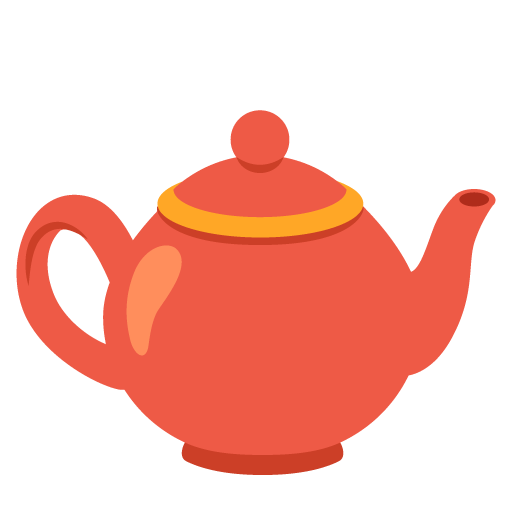
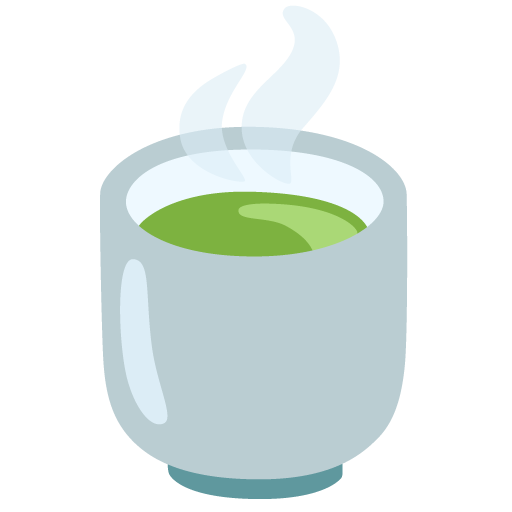
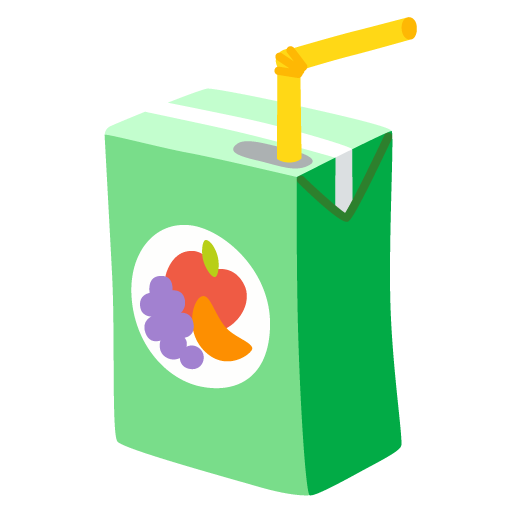
Measures nonverbal semantic knowledge. Participants see a picture at the top and two below and choose the one that goes with the top picture by meaning, such as a teacup, not a juice box, for a teapot. Scores accuracy and the time to a right choice.
Constructs
- Semantic memory
- Conceptual knowledge
- Thematic association
- Nonverbal semantic access
Research uses
- Semantic memory research
- Aphasia and semantic dementia research
- Aging studies
- Within-study group comparison
How the paradigm works
The Semantic Triads Task measures nonverbal semantic knowledge: knowing what things are for, where they belong and what goes with what. Each screen shows a picture at the top and two pictures below, and the participant clicks or taps the one that goes with the top picture by meaning, such as a teacup rather than a juice box for a teapot. There is no time limit, and the instructions ask the participant to go by what the things are, not by how the pictures look.
More about the paradigm
The format is the semantic association judgment of semantic memory research, given with pictures so that reading, naming and speech are not needed (Vandenberghe et al. 1996; Bozeat et al. 2000). The 40 triads are written for this test with pictures from Noto Emoji, the same for every participant. In each, the right picture goes with the top one by use, origin, product, place, habitat or time, and the other picture is the same kind of thing with no such link (two buildings, two drinks), so the kind of thing never gives the answer away, and color does not point to the right picture. Links and pictures were chosen to hold across the countries of the eight languages the test runs in, with no holidays, religion, national foods or landmarks, as Tran and colleagues (2024) did for theirs. The right picture is on each side for half the triads, never more than three times running. The standard session is 40 triads after 3 practice triads that show the right answer.
Accuracy is the main score, and the median time to a right choice is also reported. Healthy adults choose the right picture on nearly every triad of such tasks (Tran et al. 2024), so in healthy samples the time varies more than accuracy. Scores support research and do not diagnose.
Scores
- Accuracy%
- Share of answered test triads on which the picture that goes with the top one was chosen.
- Higher is better
- Median Correct Timems
- Median time from a triad appearing to a right choice. Choices under 100 ms are left out.
- Informational
- Total Correctcount
- Test triads answered with the right picture.
- Higher is better
- Triads Answeredcount
- Test triads answered.
- Informational
- Choices Under 100 mscount
- Choices made less than 100 ms after the triad appeared.
- Lower is better
- Practice Accuracy%
- Share of the three practice triads answered with the right picture.
- Informational
Use and evidence
18 papers from 2021 to 2025 name this task in their title or abstract, down 38% compared with 2016 to 2020. That ranks it 334 of 395 test families in our census. See the counts for every test.
Show the numbers
| Year | Papers |
|---|---|
| 2025 | 5 |
| 2024 | 3 |
| 2023 | 1 |
| 2022 | 6 |
| 2021 | 3 |
| 2020 | 3 |
| 2019 | 4 |
| 2018 | 8 |
| 2017 | 10 |
| 2016 | 4 |
| 2015 | 7 |
| 2014 | 7 |
| 2013 | 7 |
| 2012 | 3 |
| 2011 | 4 |
| 2010 | 4 |
| 2009 | 3 |
| 2008 | 6 |
| 2007 | 2 |
| 2006 | 4 |
| 2005 | 0 |
| 2004 | 0 |
| 2003 | 0 |
| 2002 | 0 |
| 2001 | 0 |
| 2000 | 0 |
Use grade E
Fewer than 30 papers from 2021 to 2025.
Evidence grade C
At least 2 test-retest papers, 30 reliability or validity papers or 3 registered clinical studies.
- Papers on test-retest reliability
- 5
- Papers on reliability or validity
- 24
- Registered clinical studies using it as an outcome
- 6
How the grades work
Use: A is 1,000 or more papers from 2021 to 2025, B 300 to 999, C 100 to 299, D 30 to 99 and E fewer than 30. Evidence: A means at least 25 papers report its test-retest reliability and at least 25 registered clinical studies use it as an outcome; B, at least 8 test-retest papers, and either 5 registered clinical studies or 150 reliability or validity papers; C, at least 2 test-retest papers, 30 reliability or validity papers or 3 registered clinical studies; D, little published measurement evidence found. The counts measure use. They include every paper that names the task in its title or abstract. Grades describe the published research on this task, not ConductCognition's version of it.
Source: ConductCognition test census 0.14.0, counted 31 October 2026 from OpenAlex and ClinicalTrials.gov.
Task design
The trial sequence as the test runs in ConductCognition.
- Pictures
- Everyday things, animals and plants from Noto Emoji: one at the top and two below, chosen by a click, a tap or Enter, with no time limit.
- Triads
- 40 triads written for this test, the same for everyone (standard; 20 to 40). The right picture goes with the top one by use, origin, product, place, habitat or time; the other is the same kind of thing with no such link.
- Languages
- No words. Links and pictures chosen to hold across the eight languages' countries: no holidays, religion, national foods or landmarks.
- Sides
- The right picture is on each side for half the triads, never more than 3 times running.
- Timing
- 500 ms between triads.
- Practice
- 3 triads, each shown again with the right picture marked for 1,500 ms.
The triads are written for this test with Noto Emoji pictures; no item or pairing of a published picture association test is used. The right picture is set by each triad's design, not counted from participants. The scores support research and do not diagnose.
Quality checks
Each session is marked valid, needs review or invalid, with the reason, before you see its scores.
Scored rows: semantic_association_choice test rows from the scored run, two choices per triad (chance 50%), the target on each side for half the triads and never more than 3 times running on one side. Accuracy below chance invalidates and not above chance is flagged. One side on 90% of triads invalidates when accuracy is not above chance. Choices under 200 ms on at least half the triads invalidate. A hidden tab is flagged.
Why these rules
Choosing the picture that does not go with the top one, the instruction reversed, gives accuracy below chance. Accuracy significantly below chance (one-sided exact test, p < .05) cannot come from guessing; it means the response mapping was reversed or the task was not followed (Slick, Sherman and Iverson 1999 treat below-chance forced-choice performance as definite response bias). Chance-level accuracy can be a real result in impaired participants, so it is only flagged. One option on at least 90% of answered trials, when the correct options are balanced and accuracy is not above chance, means the answers did not depend on the items (the task counterpart of long-string responding in surveys; Curran 2016). An answer under 200 ms is faster than a simple visual reaction, so it cannot reflect the item. Following response-time effort screening for untimed tests (Wise and Kong 2005), the session is invalid only when at least half the answers are that fast.
Running this test
Settings you can change
| Setting | Standard | Allowed |
|---|---|---|
| Number of triads | 40 | 20 to 40 |
Yearly plans can change settings within these limits. Free and pay-as-you-go studies use the standard settings.
Need a setting this test does not have?
Devices and languages
- Untimed test: runs on desktops, laptops, tablets and phones. Participant devices
- Languages: English, Spanish, French, German, Italian, Portuguese (Brazil), Chinese (Simplified) and Japanese.
- Available on: Every plan, including the free plan.
- Recruiting online? See the setup guides for Prolific, Sona Systems, CloudResearch Connect and Qualtrics.
Cite and describe
Participants completed the Semantic Triads Task in a web browser (ConductCognition task version 1.0.0, scoring version 1.0.0; Vandenberghe R et al., 1996; Bozeat S et al., 2000; Tran EB et al., 2024), with the standard settings (number of triads: 40). The main score was accuracy (share of answered test triads on which the picture that goes with the top one was chosen).
ConductCognition versions: task version 1.0.0, scoring version 1.0.0. Every export records the versions each session used, for a methods section.
- Vandenberghe, R., Price, C., Wise, R., Josephs, O., & Frackowiak, R. S. J. (1996). Functional anatomy of a common semantic system for words and pictures. Nature, 383(6597), 254-256. https://doi.org/10.1038/383254a0Semantic association judgments given with pictures and with words.
- Bozeat, S., Lambon Ralph, M. A., Patterson, K., Garrard, P., & Hodges, J. R. (2000). Non-verbal semantic impairment in semantic dementia. Neuropsychologia, 38(9), 1207-1215. https://doi.org/10.1016/S0028-3932(00)00034-8Picture association judgments in semantic dementia.
- Jefferies, E., & Lambon Ralph, M. A. (2006). Semantic impairment in stroke aphasia versus semantic dementia: A case-series comparison. Brain, 129(8), 2132-2147. https://doi.org/10.1093/brain/awl153How finding the link and rejecting the other choice shape semantic association judgments.
- Tran, E. B., Vonk, J. M. J., Casaletto, K., Zhang, D., Christin, R., Marathe, S., Gorno-Tempini, M. L., Chang, E. F., & Kleen, J. K. (2024). Development and validation of a nonverbal consensus-based semantic memory paradigm in patients with epilepsy. Journal of the International Neuropsychological Society, 30(7), 671-679. https://doi.org/10.1017/S1355617724000158Pictures and links chosen to avoid cultural, generational and visual confounds, with response times recorded.
- Mirman, D., Landrigan, J.-F., & Britt, A. E. (2017). Taxonomic and thematic semantic systems. Psychological Bulletin, 143(5), 499-520. https://doi.org/10.1037/bul0000092Thematic links: things that go together by use, place or event.
Source papers
- Tran EB, Vonk JMJ, Casaletto K, Zhang D, Christin R, Marathe S, Gorno-Tempini ML, Chang EF, Kleen JK (2024). Development and validation of a nonverbal consensus-based semantic memory paradigm in patients with epilepsy. Journal of the International Neuropsychological Society, 30(7):671-679.N 54, 19-80
- Bozeat S, Lambon Ralph MA, Patterson K, Garrard P, Hodges JR (2000). Non-verbal semantic impairment in semantic dementia. Neuropsychologia, 38(9):1207-1215.N 10, Adults with semantic dementia
Questions
How long does the Semantic Triads Task take?
About 4 to 6 minutes, as listed in the test library.
What device does a participant need?
Untimed test: runs on desktops, laptops, tablets and phones. The browser must be Chrome, Edge, Firefox or Safari.
What scores does it produce?
Accuracy, Median Correct Time, Total Correct, Triads Answered, Choices Under 100 ms and Practice Accuracy. Each session is also marked valid, needs review or invalid, with the reason.
How widely is the Semantic Triads Task used in research?
18 papers from 2021 to 2025 name it in their title or abstract, down 38% compared with 2016 to 2020. That ranks it 334 of 395 test families in the ConductCognition test census (use grade E). Source: ConductCognition test census 0.14.0, counted 31 October 2026 from OpenAlex and ClinicalTrials.gov.
How much reliability evidence does the Semantic Triads Task have?
In the published research, 5 papers report its test-retest reliability and 6 registered clinical studies use it as an outcome (evidence grade C in the ConductCognition test census).
Which settings can a researcher change?
Number of triads (20 to 40). Settings can be changed on yearly plans; free and pay-as-you-go studies use the standard settings.
Which languages can participants use?
Participants can take this test in English, Spanish, French, German, Italian, Portuguese (Brazil), Chinese (Simplified) and Japanese. English is on every plan, and the other languages come with yearly plans. Have a native speaker read the machine-translated text before launch.
Is this a clinical test?
No. ConductCognition is for research use only. It runs, scores and exports the test; clinical interpretation is outside the platform.
Every test: the full test list.
Run this test in your next study
Start free with 10 free participants on any test, then use participant credits or a yearly plan.