Language
Picture Naming Test
Also called: picture naming task, confrontation naming, object naming task, timed written picture naming
Measure word retrieval: pictures of objects and animals, shown as emoji one at a time, with typed answers scored for correct names, types of error and the word frequency effect.
6-10 minUntimed
Free to start: 10 free participants per account, then $0.99 per participant for academic research, or any yearly plan. Preview any test free after you sign up.
- Papers, 2021 to 2025
- 1,759
- Evidence grade
- A
- Registered clinical studies
- 466
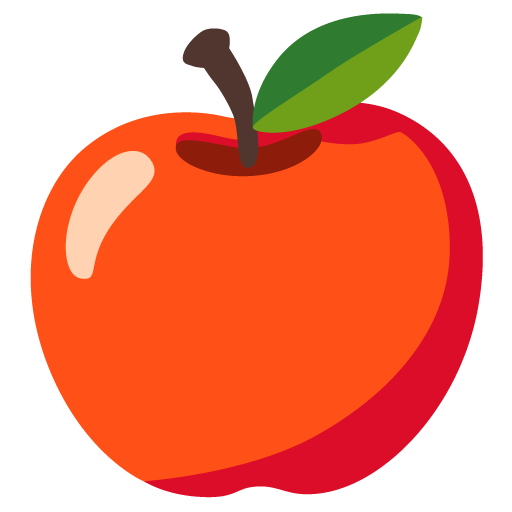 apple
What it measures
Measures how well people find the names of familiar things. Pictures of objects and animals appear one at a time and participants type each name. The pictures are emoji from one freely licensed set, and the names span three bands of word frequency.
Constructs
- Word retrieval
- Object naming
- Semantic memory
- Word frequency effect
Research uses
- Language and word retrieval research
- Aging and semantic memory research
- Within-study group comparison
How the paradigm works
The Picture Naming Test measures how well people find the names of familiar things. Each trial shows a fixation cross for 600 to 1,000 ms and then one picture with a text box below it. Participants type the name they would normally give the picture and press Enter or a button; a second button says they do not know it. The picture stays until the answer or 20 seconds, and whatever has been typed by then counts as the answer. The procedure follows timed written picture naming (Torrance and colleagues, 2018), in which adults typed the name of each picture and the time to the first key press measured how quickly the name came. Naming norms for picture sets record how often people agree on a name and how long they take to give it (Snodgrass and Vanderwart, 1980; Bonin and colleagues, 2003).
More about the paradigm
The pictures are emoji: 60 pictures of objects and animals from Noto Emoji, a freely licensed set, shown as the same image files on every device. Emoji have stood in for drawn materials before: an emoji version of a faces pain scale agreed closely with a numeric rating scale (He and colleagues, 2022). The pictures were chosen by a stated rule, and no published naming test's items, order or name are used. Each name starts from the emoji's English short name in the Unicode CLDR data and is one common word or a familiar two-word name. There are no faces, people, hands, flags, symbols or text, nothing violent or offensive, and no food or object known mainly in one region. The candidates were ordered by the word frequency of the name, and the 20 highest, the 20 around the median and the 20 lowest make three bands. Each picture has a target name, accepted alternatives and a list of related names, all written for this task. As standard all 60 appear in an order drawn from the session's seed; researchers can set 30 or 45, with equal numbers from each band, and a limit of 10 to 30 seconds. Three practice pictures outside the test set come first, each followed by the right answer; the test gives no feedback.
The primary score is percent correct over all pictures shown. The target name, an accepted name or either with one spelling slip counts as correct, and case, articles, plurals and spaces are ignored. Percent correct in each band and the frequency effect, the higher band minus the lower band, show how much naming depends on how common a word is. The median time to the first key press on correct answers is reported overall and for each band, with counts of semantic errors, other errors, no answers and spelling slips. Most naming studies use line drawings and spoken answers, so these scores are not comparable with norms from those studies. The names are English; sessions run in other languages are flagged for review. Scores support research and do not diagnose.
Scores
- Percent Correct%
- Percent of pictures shown that were given the target name, an accepted name or either with one spelling slip. A picture with no answer counts as not named.
- Higher is better
- Percent Correct, Higher Frequency%
- Percent correct among pictures whose names are in the higher word frequency band.
- Higher is better
- Percent Correct, Middle Frequency%
- Percent correct among pictures whose names are in the middle word frequency band.
- Higher is better
- Percent Correct, Lower Frequency%
- Percent correct among pictures whose names are in the lower word frequency band.
- Higher is better
- Frequency Effect%
- Percent correct in the higher band minus the lower band, in percentage points.
- Larger values mean naming depended more on how common the word is
- Median Time to First Keyms
- Median time from the picture to the first key press on correct answers, over presses at or after 100 ms.
- Context for the scores
- Median Time to First Key, Higher Frequencyms
- The same time within the higher band.
- Context for the scores
- Median Time to First Key, Middle Frequencyms
- The same time within the middle band.
- Context for the scores
- Median Time to First Key, Lower Frequencyms
- The same time within the lower band.
- Context for the scores
- Semantic Errorscount
- Answers that name something related, from a list written for each picture, for example camel for llama.
- Context for the scores
- Other Errorscount
- Answers that are neither correct nor on the related list.
- Context for the scores
- No Answerscount
- Pictures left empty, answered I don't know or given a phrase that says the same.
- Context for the scores
- Spelling Slipscount
- Correct answers with one letter added, missing, changed or swapped, in names of four or more letters.
- Context for the scores
- Answered Picturescount
- Pictures given an answer other than no answer or text that cannot be a name.
- Fewer than a quarter of the planned pictures invalidates the session
- Longest Empty Runtrials
- Most consecutive pictures with no answer or with text that cannot be a name.
- A quarter of the planned pictures, and at least 8, is flagged for review
- Anticipationscount
- First key presses under 100 ms. They still count for accuracy.
- Context for the scores
- Paste Attemptscount
- Times text was pasted or dropped into the box. Pasting is blocked.
- Context for the scores
Use and evidence
1,759 papers from 2021 to 2025 name this task in their title or abstract, down 1% compared with 2016 to 2020. That ranks it 13 of 395 test families in our census. See the counts for every test.
Show the numbers
| Year | Papers |
|---|---|
| 2025 | 427 |
| 2024 | 366 |
| 2023 | 342 |
| 2022 | 291 |
| 2021 | 333 |
| 2020 | 326 |
| 2019 | 352 |
| 2018 | 398 |
| 2017 | 345 |
| 2016 | 353 |
| 2015 | 310 |
| 2014 | 337 |
| 2013 | 313 |
| 2012 | 265 |
| 2011 | 228 |
| 2010 | 226 |
| 2009 | 193 |
| 2008 | 193 |
| 2007 | 189 |
| 2006 | 193 |
| 2005 | 148 |
| 2004 | 158 |
| 2003 | 132 |
| 2002 | 120 |
| 2001 | 92 |
| 2000 | 104 |
Use grade A
1,000 or more papers from 2021 to 2025.
Evidence grade A
At least 25 papers report its test-retest reliability and at least 25 registered clinical studies use it as an outcome.
- Papers on test-retest reliability
- 82
- Papers on reliability or validity
- 742
- Registered clinical studies using it as an outcome
- 466
Note on the counts: most studies use spoken answers and line drawings.
How the grades work
Use: A is 1,000 or more papers from 2021 to 2025, B 300 to 999, C 100 to 299, D 30 to 99 and E fewer than 30. Evidence: A means at least 25 papers report its test-retest reliability and at least 25 registered clinical studies use it as an outcome; B, at least 8 test-retest papers, and either 5 registered clinical studies or 150 reliability or validity papers; C, at least 2 test-retest papers, 30 reliability or validity papers or 3 registered clinical studies; D, little published measurement evidence found. The counts measure use. They include every paper that names the task in its title or abstract. Grades describe the published research on this task, not ConductCognition's version of it.
Source: ConductCognition test census 0.14.0, counted 31 October 2026 from OpenAlex and ClinicalTrials.gov.
Task design
The trial sequence as the test runs in ConductCognition.
- Pictures
- 60 emoji of objects and animals from Noto Emoji, a freely licensed set, shown as the same image files on every device. The device's emoji font is never used.
- Answers
- Typed in a text box with word correction off. Enter or a button submits, and a second button says the name is not known. Spoken answers are not recorded.
- Display
- A fixation cross for 600 to 1,000 ms, then one picture, up to 200 px wide, until the answer or 20 seconds (standard; 10 to 30). Whatever has been typed at the limit counts as the answer.
- Length
- 60 pictures (standard; 30 or 45), a third from each frequency band, in an order drawn from the session's seed.
- Frequency bands
- 20 names each of higher, middle and lower word frequency: Zipf 4.88 to 5.72, 3.86 to 3.93 and 2.14 to 2.94.
- Practice
- 3 pictures outside the test set, each followed by the right answer for 2,000 ms. The test gives no feedback.
- Names
- The target name, an accepted name or either with one spelling slip counts as correct; case, articles, plurals and spaces are ignored. Listed related names count as semantic errors.
- Selection rule
- Object and animal emoji whose Unicode CLDR short name gives one common word or a familiar two-word name. No faces, people, hands, flags, symbols or text, nothing violent or offensive, and no food or object known mainly in one region. The items come from no published naming test.
Most naming studies use line drawings and spoken answers. This version shows emoji and takes typed answers, so its scores are not comparable with norms from those studies. The names are English; sessions run in other languages are flagged for review.
Quality checks
Each session is marked valid, needs review or invalid, with the reason, before you see its scores.
Scored rows: picture_naming_test from the scored run, one typed answer for each picture. A typed name has no chance level, so accuracy is not judged against chance. Answers on fewer than a quarter of the planned pictures invalidate. The same answer on 90% of at least 12 answered pictures invalidates. First key presses under 100 ms on at least half the answers invalidate. Fewer pictures than planned withhold the percentile. A run of empty or nonsense answers as long as a quarter of the planned pictures (at least 8) is flagged and withholds the percentile. A session run in another language is flagged. A hidden tab withholds the percentile.
Why these rules
Not knowing a name can be a real result, so a picture with no answer counts as not named and does not by itself invalidate the session. A third of the pictures have common everyday names, so a participant who answers fewer than a quarter of all the pictures has not attempted the task. Every picture has a different name, so one word typed for nearly every picture cannot come from the pictures. A key press under 100 ms cannot be a reaction to the picture. A long run of empty or nonsense answers may mean the participant stopped, because the order is random and easy pictures fall inside any long run. The names are scored in English, so a session run in another language is flagged for review. A hidden tab lets the study, delay or response timers run without the participant, so a percentile is withheld after one. Another tab could also be used to look up a name.
Running this test
Settings you can change
| Setting | Standard | Allowed |
|---|---|---|
| Pictures | 60 (standard) | 30, 45, 60 (standard) |
| Time per picture (seconds) | 20 | 10 to 30 |
Yearly plans can change settings within these limits. Free and pay-as-you-go studies use the standard settings.
Need a setting this test does not have?
Devices and languages
- Untimed test: runs on desktops, laptops, tablets and phones. Participant devices
- Instructions and screens: English, Spanish, French, German, Italian, Portuguese (Brazil), Chinese (Simplified) and Japanese. Words and sentences: English.
- Available on: Every plan, including the free plan.
- Recruiting online? See the setup guides for Prolific, Sona Systems, CloudResearch Connect and Qualtrics.
Cite and describe
Participants completed the Picture Naming Test in a web browser (ConductCognition task version 1.0.0, scoring version 1.0.0; Snodgrass & Vanderwart, 1980; Torrance et al., 2018), with the standard settings (pictures: 60; time per picture (seconds): 20). The main score was percent correct (percent of pictures shown that were given the target name, an accepted name or either with one spelling slip).
ConductCognition versions: task version 1.0.0, scoring version 1.0.0. Every export records the versions each session used, for a methods section.
- Snodgrass, J. G., & Vanderwart, M. (1980). A standardized set of 260 pictures: Norms for name agreement, image agreement, familiarity, and visual complexity. Journal of Experimental Psychology: Human Learning and Memory, 6(2), 174-215. https://doi.org/10.1037/0278-7393.6.2.174Naming norms and name agreement.
- Torrance, M., Nottbusch, G., Alves, R. A., Arfé, B., Chanquoy, L., Chukharev-Hudilainen, E., Dimakos, I., Fidalgo, R., Hyönä, J., Jóhannesson, Ó. I., Madjarov, G., Pauly, D. N., Uppstad, P. H., van Waes, L., Vernon, M., & Wengelin, Å. (2018). Timed written picture naming in 14 European languages. Behavior Research Methods, 50(2), 744-758. https://doi.org/10.3758/s13428-017-0902-xThe typed procedure and the time to the first key press.
- Bonin, P., Peereman, R., Malardier, N., Méot, A., & Chalard, M. (2003). A new set of 299 pictures for psycholinguistic studies: French norms for name agreement, image agreement, conceptual familiarity, visual complexity, image variability, age of acquisition, and naming latencies. Behavior Research Methods, Instruments, & Computers, 35(1), 158-167. https://doi.org/10.3758/BF03195507Naming norms and latency.
- He, S., Renne, A., Argandykov, D., Convissar, D., & Lee, J. (2022). Comparison of an emoji-based visual analog scale with a numeric rating scale for pain assessment. JAMA, 328(2), 208. https://doi.org/10.1001/jama.2022.7489Emoji in place of published drawings.
Source papers
- Snodgrass JG, Vanderwart M (1980). A standardized set of 260 pictures: norms for name agreement, image agreement, familiarity, and visual complexity. Journal of Experimental Psychology: Human Learning and Memory, 6(2):174-215.Paradigm source, Adults
- Torrance M, Nottbusch G, Alves RA, Arfé B, Chanquoy L, Chukharev-Hudilainen E, Dimakos I, Fidalgo R, Hyönä J, Jóhannesson ÓI, Madjarov G, Pauly DN, Uppstad PH, van Waes L, Vernon M, Wengelin Å (2018). Timed written picture naming in 14 European languages. Behavior Research Methods, 50(2):744-758.Paradigm source, Adults
- Bonin P, Peereman R, Malardier N, Méot A, Chalard M (2003). A new set of 299 pictures for psycholinguistic studies: French norms for name agreement, image agreement, conceptual familiarity, visual complexity, image variability, age of acquisition, and naming latencies. Behavior Research Methods, Instruments, and Computers, 35(1):158-167.Paradigm source, Adults
- He S, Renne A, Argandykov D, Convissar D, Lee J (2022). Comparison of an emoji-based visual analog scale with a numeric rating scale for pain assessment. JAMA, 328(2):208.Paradigm source, Adults
Questions
How long does the Picture Naming Test take?
About 6 to 10 minutes, as listed in the test library.
What device does a participant need?
Untimed test: runs on desktops, laptops, tablets and phones. The browser must be Chrome, Edge, Firefox or Safari.
What scores does it produce?
Percent Correct, Percent Correct, Higher Frequency, Percent Correct, Middle Frequency, Percent Correct, Lower Frequency, Frequency Effect, Median Time to First Key, Median Time to First Key, Higher Frequency, Median Time to First Key, Middle Frequency, Median Time to First Key, Lower Frequency, Semantic Errors, Other Errors, No Answers, Spelling Slips, Answered Pictures, Longest Empty Run, Anticipations and Paste Attempts. Each session is also marked valid, needs review or invalid, with the reason.
How widely is the Picture Naming Test used in research?
1,759 papers from 2021 to 2025 name it in their title or abstract, down 1% compared with 2016 to 2020. That ranks it 13 of 395 test families in the ConductCognition test census (use grade A). Source: ConductCognition test census 0.14.0, counted 31 October 2026 from OpenAlex and ClinicalTrials.gov.
How much reliability evidence does the Picture Naming Test have?
In the published research, 82 papers report its test-retest reliability and 466 registered clinical studies use it as an outcome (evidence grade A in the ConductCognition test census).
Which settings can a researcher change?
Pictures (30, 45, 60 (standard)) and time per picture (seconds) (10 to 30). Settings can be changed on yearly plans; free and pay-as-you-go studies use the standard settings.
Which languages can participants use?
The instructions and screens are in English, Spanish, French, German, Italian, Portuguese (Brazil), Chinese (Simplified) and Japanese. The words and sentences stay in English, so sessions in other languages are flagged for review. English is on every plan, and the other languages come with yearly plans. Have a native speaker read the machine-translated text before launch.
Is this a clinical test?
No. ConductCognition is for research use only. It runs, scores and exports the test; clinical interpretation is outside the platform.
Every test: the full test list.
Run this test in your next study
Start free with 10 free participants on any test, then use participant credits or a yearly plan.