Episodic Memory
Repetition Priming Task
Also called: repetition priming test, picture priming task, object priming, implicit memory task, classification priming
Measure implicit memory: people sort pictures as natural or made by people, and pictures sorted before are sorted faster.
5-6 minTimed: desktop or laptop with a mouse or trackpad
Free to start: 10 free participants per account, then $0.99 per participant for academic research, or any yearly plan. Try it here first, with no account.
- Papers, 2021 to 2025
- 149
- Evidence grade
- C
- Registered clinical studies
- 0
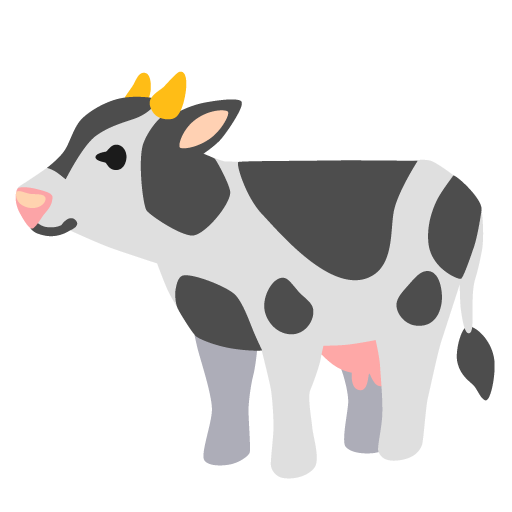
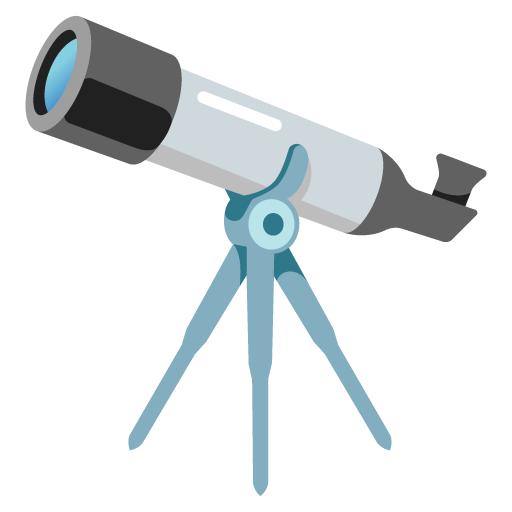 Seen before: faster
What it measures
Measures how much faster people judge a picture they have judged before, a form of memory that needs no conscious recall. Participants sort emoji pictures as natural or made by people, then sort a second set in which half the pictures are repeats. The main score is the time saved on repeats.
Constructs
- Repetition priming
- Implicit memory
- Object recognition
- Semantic classification
Research uses
- Implicit memory research
- Memory and aging research
- Within-study group comparison
How the paradigm works
The Repetition Priming Task measures repetition priming: people sort a picture faster when they have sorted it before, even when they are not trying to remember it. Each trial shows a cross for 500 ms and then a picture for 500 ms on a dark panel, and participants press F or J to say whether the picture shows something natural, such as an animal, a plant or a vegetable, or something made by people, such as a tool or a vehicle. Which key means natural is drawn for each session, and an answer counts until 2,500 ms after the picture appears. Eight practice pictures come first, each followed by feedback. In the first part, 24 pictures, half natural, are each sorted three times, in rounds of a new random order. In the second part, those 24 pictures come back mixed with 24 new ones, again half natural, and are sorted the same way. Nothing is said about memory. The procedure follows Wig, Buckner and Schacter (2009), who showed each picture for 500 ms, three times at study, before a test with the same judgment; the natural or man-made judgment is the one Zago and colleagues (2005) used. Researchers can set 16, 20 or 24 repeated pictures and one to three rounds in the first part.
More about the paradigm
The pictures are 84 emoji from Noto Emoji, a freely licensed set, shown as the same image files on every device. They are the pictures of the Directed Forgetting Task, so run the two tests in different sessions; otherwise the new pictures of one are not new. Food made from natural things and pictures of things that are not real are left out, so each picture has one plain answer. The session's seed draws which pictures are repeated and which are new, so across sessions every picture serves in both roles.
The primary score is the priming effect: the median correct response time to new pictures minus the median for repeated pictures in the second part, in milliseconds. Answers under 100 ms are anticipations and are left out, as are missed answers. Scores also give the effect as a percent of the median for new pictures, the medians and accuracy for repeated and for new pictures, the speed-up across the rounds of the first part, overall accuracy and response time, anticipations and missed answers. Part of the effect can come from learning the answer given to a picture rather than from recognizing it faster (Dobbins and colleagues, 2004). The effect is a difference within each participant and suits group comparisons best. Scores support research and do not diagnose.
Scores
- Priming Effectms
- Median correct response time to new pictures minus repeated pictures in the second part.
- Positive means repeated pictures were sorted faster
- Priming Effect, Percent%
- The priming effect as a percent of the median response time to new pictures.
- Allows for each participant's overall speed
- Median Response Time, Repeatedms
- Median correct response time to repeated pictures in the second part.
- Context for the priming effect
- Median Response Time, Newms
- Median correct response time to new pictures in the second part.
- Context for the priming effect
- Accuracy, Repeated%
- Share of repeated pictures sorted correctly; a missed answer is incorrect.
- Higher is better
- Accuracy, New%
- Share of new pictures sorted correctly; a missed answer is incorrect.
- Higher is better
- Accuracy Priming%
- Accuracy for repeated pictures minus accuracy for new pictures.
- Positive means repeated pictures were sorted more accurately
- Speed-Up in the First Partms
- Median correct response time in the first round of the first part minus the last round; empty with one round.
- Positive means pictures were sorted faster on later rounds
- Accuracy%
- Share of pictures in the second part sorted correctly.
- Under 0.8 is flagged for review
- Median Response Timems
- Median correct response time in the second part.
- Context for the scores
- Accuracy in the First Part%
- Share of presentations in the first part sorted correctly.
- Context for the scores
- Fewest Correct Answers per Conditioncount
- Correct answers with a usable response time for repeated or for new pictures, whichever is fewer.
- Under 10 is flagged for review
- Anticipationscount
- Answers under 100 ms in the second part. They are left out of response times.
- Context for the scores
- Missed Answerscount
- Pictures in the second part with no answer within 2,500 ms.
- Context for the scores
- Pictures Recordedcount
- Pictures of the second part recorded in the run.
- Fewer than half of those planned invalidates the session
- Pictures Plannedcount
- Pictures of the second part the settings planned.
- Fewer recorded than planned is flagged for review
Use and evidence
149 papers from 2021 to 2025 name this task in their title or abstract, down 22% compared with 2016 to 2020. That ranks it 196 of 632 test families in our census. See the counts for every test.
Show the numbers
| Year | Papers |
|---|---|
| 2025 | 28 |
| 2024 | 30 |
| 2023 | 25 |
| 2022 | 31 |
| 2021 | 35 |
| 2020 | 36 |
| 2019 | 33 |
| 2018 | 45 |
| 2017 | 44 |
| 2016 | 34 |
| 2015 | 47 |
| 2014 | 61 |
| 2013 | 73 |
| 2012 | 77 |
| 2011 | 69 |
| 2010 | 85 |
| 2009 | 75 |
| 2008 | 94 |
| 2007 | 56 |
| 2006 | 72 |
| 2005 | 57 |
| 2004 | 63 |
| 2003 | 56 |
| 2002 | 49 |
| 2001 | 64 |
| 2000 | 51 |
Use grade C
100 to 299 papers from 2021 to 2025.
Evidence grade C
At least 2 test-retest papers, 30 reliability or validity papers or 3 registered clinical studies.
- Papers on test-retest reliability
- 4
- Papers on reliability or validity
- 33
- Registered clinical studies using it as an outcome
- 0
Measured on ConductCognition
Pooled across the studies that feed our platform norms, by device group. A figure needs 50 or more people.
No pooled figure yet.
How the grades work
Use: A is 1,000 or more papers from 2021 to 2025, B 300 to 999, C 100 to 299, D 30 to 99 and E fewer than 30. Evidence: A means at least 25 papers report its test-retest reliability and at least 25 registered clinical studies use it as an outcome; B, at least 8 test-retest papers, and either 5 registered clinical studies or 150 reliability or validity papers; C, at least 2 test-retest papers, 30 reliability or validity papers or 3 registered clinical studies; D, little published measurement evidence found. The counts measure use. They include every paper that names the task in its title or abstract. Grades describe the published research on this task, not ConductCognition's version of it.
Source: ConductCognition test census 0.44.0, counted 31 October 2026 from OpenAlex and ClinicalTrials.gov.
Task design
The trial sequence as the test runs in ConductCognition.
- Pictures
- 76 emoji from Noto Emoji, a freely licensed set, 25 natural and 51 made by people, and 8 more for practice, shown at 160 px on a dark panel. They are the pictures of the Directed Forgetting Task.
- Trial
- A cross for 500 ms, then the picture for 500 ms. Participants press F or J for natural or made by people, within 2,500 ms of the picture's onset; which key is which is drawn for each session.
- First part
- 24 pictures (standard; 16 or 20), half natural, each sorted 3 times (standard; 1 to 3), in rounds of a new random order.
- Second part
- The 24 pictures again, mixed with 24 new ones, half natural, with no more than 3 of one answer and 4 repeated or new in a row.
- Practice
- 8 pictures, half natural, each followed by feedback for 800 ms. No practice picture is tested.
- Score
- Median correct response time to new pictures minus repeated ones. Answers under 100 ms and missed answers are left out.
The pictures are emoji that the Directed Forgetting Task also shows, so run the two tests in different sessions. Nothing is said about memory.
Quality checks
Each session is marked valid, needs review or invalid, with the reason, before you see its scores.
Scored rows: repetition_priming_test from the scored run, F or J for natural or made by people (chance 50%, half the pictures natural) within 2,500 ms of the picture's onset, correctness from the key for the picture. Below chance invalidates and not above chance is flagged. One key on 90% of answers invalidates when accuracy is not above chance. Missed responses and responses under 100 ms follow the timed-test rule. Recording fewer than half the planned pictures invalidates, and any other incomplete run is flagged. Accuracy under 80% or fewer than 10 correct answers for repeated or for new pictures is flagged for review.
Why these rules
Accuracy significantly below chance (one-sided exact test, p < .05) cannot come from guessing; it means the response mapping was reversed or the task was not followed (Slick, Sherman and Iverson 1999 treat below-chance forced-choice performance as definite response bias). Chance-level accuracy can be a real result in impaired participants, so it is only flagged. One option on at least 90% of answered trials, when the correct options are balanced and accuracy is not above chance, means the answers did not depend on the items (the task counterpart of long-string responding in surveys; Curran 2016). Missed responses and responses under 100 ms keep the platform's timed-test rule: more than max(3, 25%) missed responses or more than max(2, 20%) responses under 100 ms invalidate, and any is flagged. A response under 100 ms cannot be a reaction to the stimulus. The pictures are plainly natural or made by people, so accuracy under 80% means the response times may not reflect the judgment asked for. Priming is a difference between median correct response times, so it needs enough of them for repeated and for new pictures. A hidden tab lets the study, delay or response timers run without the participant, so a percentile is withheld after one.
No percentile. Scores and quality flags only.
Running this test
Settings you can change
| Setting | Standard | Allowed |
|---|---|---|
| Repeated pictures in the second part | 24 (standard) | 16, 20, 24 (standard) |
| Times each picture is sorted in the first part | 3 | 1 to 3 |
Yearly plans can change settings within these limits. Free and pay-as-you-go studies use the standard settings.
Need a setting this test does not have?
Devices and languages
- Timed test: participants need a desktop or laptop with a mouse or trackpad. Participant devices
- Languages: English, Spanish, French, German, Italian, Portuguese (Brazil), Chinese (Simplified) and Japanese.
- Available on: Every plan, including the free plan.
- No percentile. Scores and quality flags only. How norms work
- Recruiting online? See the setup guides for Prolific, Sona Systems, CloudResearch Connect and Qualtrics.
Cite and describe
Participants completed the Repetition Priming Task in a web browser (ConductCognition task version 1.0.0, scoring version 1.0.0; Wig, Buckner & Schacter, 2009; Zago, Fenske, Aminoff & Bar, 2005), with the standard settings (repeated pictures in the second part: 24; times each picture is sorted in the first part: 3). The main score was priming effect (median correct response time to new pictures minus repeated pictures in the second part).
ConductCognition versions: task version 1.0.0, scoring version 1.0.0. Every export records the versions each session used, for a methods section.
- Wig, G. S., Buckner, R. L., & Schacter, D. L. (2009). Repetition priming influences distinct brain systems: Evidence from task-evoked data and resting-state correlations. Journal of Neurophysiology, 101(5), 2632-2648. https://doi.org/10.1152/jn.91213.2008The study and test design, 500 ms pictures, three study presentations and median scores.
- Zago, L., Fenske, M. J., Aminoff, E., & Bar, M. (2005). The rise and fall of priming: How visual exposure shapes cortical representations of objects. Cerebral Cortex, 15(11), 1655-1665. https://doi.org/10.1093/cercor/bhi060The natural or man-made judgment and priming as new minus repeated.
- Dobbins, I. G., Schnyer, D. M., Verfaellie, M., & Schacter, D. L. (2004). Cortical activity reductions during repetition priming can result from rapid response learning. Nature, 428(6980), 316-319. https://doi.org/10.1038/nature02400The part of priming that comes from learning the answer.
- Schacter, D. L. (1987). Implicit memory: History and current status. Journal of Experimental Psychology: Learning, Memory, and Cognition, 13(3), 501-518. https://doi.org/10.1037/0278-7393.13.3.501Implicit memory and priming.
Source papers
- Wig GS, Buckner RL, Schacter DL (2009). Repetition priming influences distinct brain systems: evidence from task-evoked data and resting-state correlations. Journal of Neurophysiology, 101(5):2632-2648.Paradigm source, Young adults
- Zago L, Fenske MJ, Aminoff E, Bar M (2005). The rise and fall of priming: how visual exposure shapes cortical representations of objects. Cerebral Cortex, 15(11):1655-1665.Paradigm source, Young adults
- Dobbins IG, Schnyer DM, Verfaellie M, Schacter DL (2004). Cortical activity reductions during repetition priming can result from rapid response learning. Nature, 428(6980):316-319.Paradigm source, Adults
- Schacter DL (1987). Implicit memory: history and current status. Journal of Experimental Psychology: Learning, Memory, and Cognition, 13(3):501-518.Paradigm source, Mixed
Questions
How long does the Repetition Priming Task take?
About 5 to 6 minutes, as listed in the test library.
What device does a participant need?
Timed test: participants need a desktop or laptop with a mouse or trackpad. The browser must be Chrome, Edge, Firefox or Safari.
What scores does it produce?
Priming Effect, Priming Effect, Percent, Median Response Time, Repeated, Median Response Time, New, Accuracy, Repeated, Accuracy, New, Accuracy Priming, Speed-Up in the First Part, Accuracy, Median Response Time, Accuracy in the First Part, Fewest Correct Answers per Condition, Anticipations, Missed Answers, Pictures Recorded and Pictures Planned. Each session is also marked valid, needs review or invalid, with the reason.
How widely is the Repetition Priming Task used in research?
149 papers from 2021 to 2025 name it in their title or abstract, down 22% compared with 2016 to 2020. That ranks it 196 of 632 test families in the ConductCognition test census (use grade C). Source: ConductCognition test census 0.44.0, counted 31 October 2026 from OpenAlex and ClinicalTrials.gov.
How much reliability evidence does the Repetition Priming Task have?
In the published research, 4 papers report its test-retest reliability and 0 registered clinical studies use it as an outcome (evidence grade C in the ConductCognition test census).
Does it report a percentile?
No. Scores and quality flags only.
Which settings can a researcher change?
Repeated pictures in the second part (16, 20, 24 (standard)) and times each picture is sorted in the first part (1 to 3). Settings can be changed on yearly plans; free and pay-as-you-go studies use the standard settings.
Which languages can participants use?
Participants can take this test in English, Spanish, French, German, Italian, Portuguese (Brazil), Chinese (Simplified) and Japanese. English is on every plan, and the other languages come with yearly plans. Have a native speaker read the machine-translated text before launch.
Is this a clinical test?
No. ConductCognition is for research use only. It runs, scores and exports the test; clinical interpretation is outside the platform.
Every test: the full test list.
Run this test in your next study
Start free with 10 free participants on any test, then use participant credits or a yearly plan.