Working Memory
Keep-Track Task
Also called: keep track task, keeping track task, keep-track updating task, category monitoring task
Measure working memory updating: pictures from six groups appear one at a time, and participants choose the last picture from each group they tracked.
10-12 minUntimed
Free to start: 10 free participants per account, then $0.99 per participant for academic research, or any yearly plan. Preview any test free after you sign up.
- Papers, 2021 to 2025
- 4
- Evidence grade
- C
- Registered clinical studies
- 7
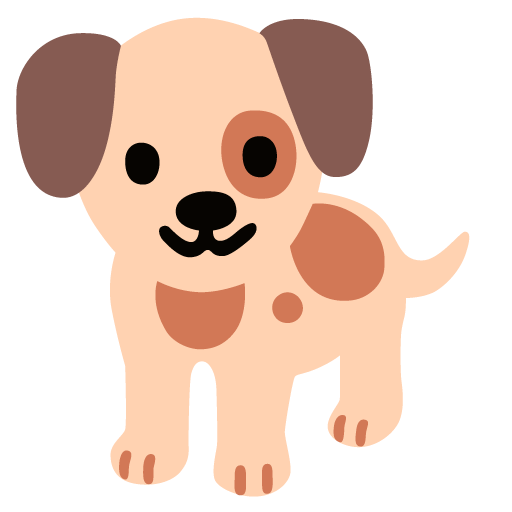
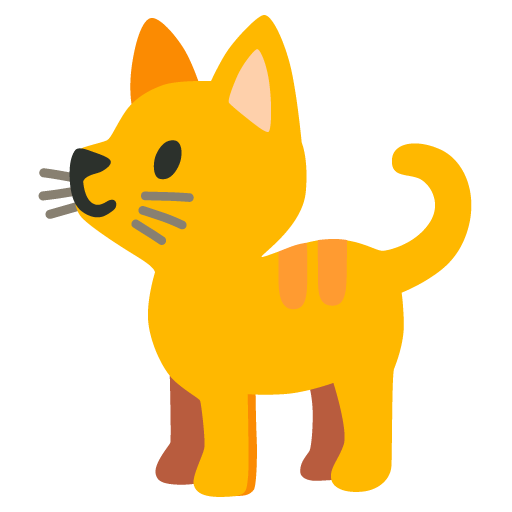
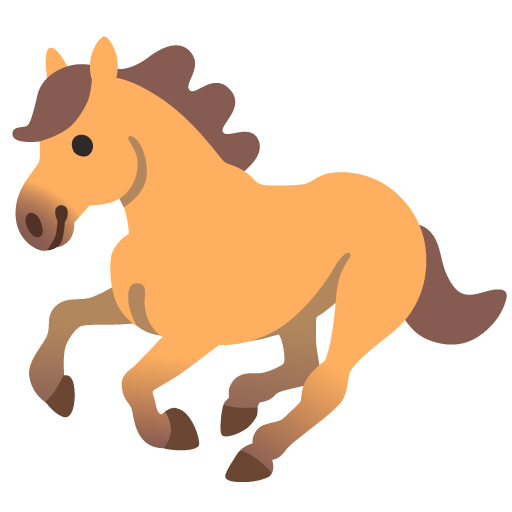
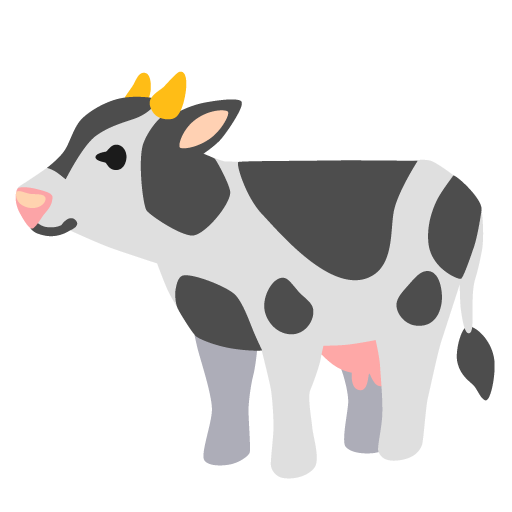
What it measures
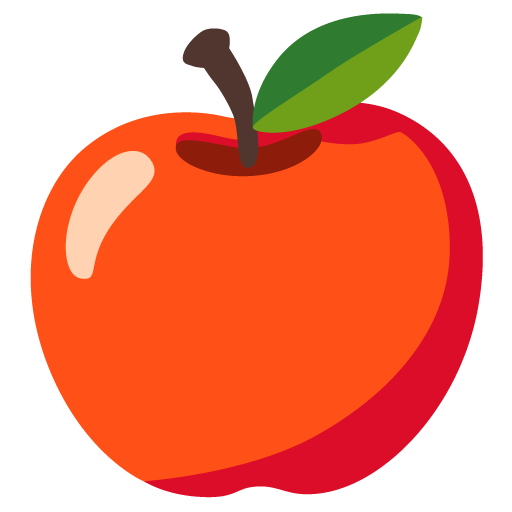
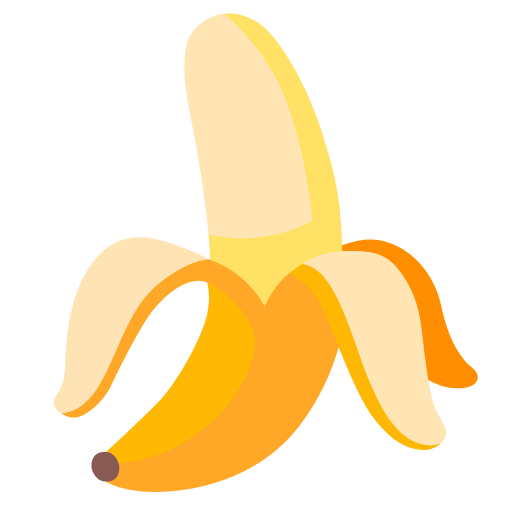
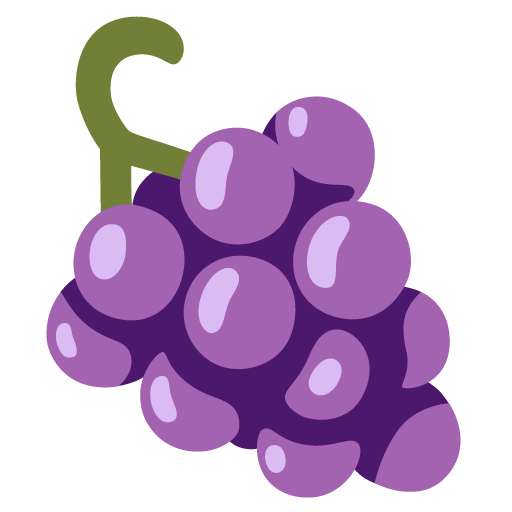
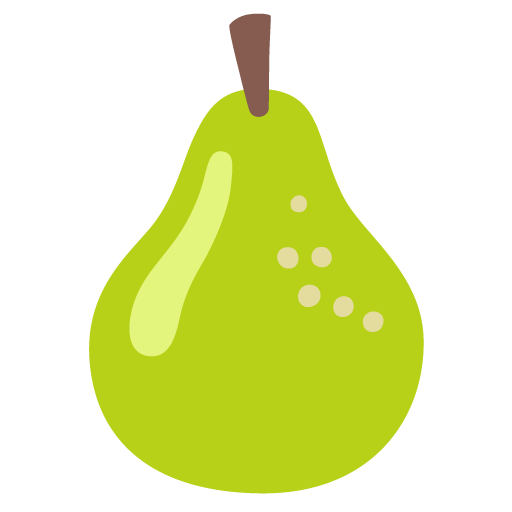
Measures how well people update working memory. Pictures from six groups appear one at a time, and at the end participants choose the last picture they saw from each of two to four groups named before the list.
Constructs
- Working memory updating
- Monitoring
- Executive function
Research uses
- Executive function research in aging and clinical groups
- Latent-variable studies of updating, shifting and inhibition
- Within-study comparison of updating load
How the paradigm works
The Keep-Track Task measures working memory updating: holding the latest item of each of several groups and replacing it whenever a newer one appears. Before each list the participant sees the names of the groups to keep track of, and the names stay at the bottom of the screen. Fifteen pictures then appear one at a time for 1,500 ms each, two or three from each of six groups (animals, fruit, vehicles, clothes, musical instruments and sports), in a random order. At the end the participant sees a row of the six pictures of each tracked group and chooses the last one shown.
More about the paradigm
The task follows the keep-track task of Miyake and colleagues (2000), adapted from Yntema (1963), in the form Friedman and colleagues (2008) gave it: 15 items per list, two or three from each of six categories, 1,500 ms each, the target categories on screen throughout, and two, three or four categories to track, four lists at each number in a random order, 12 lists in all, after one practice list at each number. Miyake and colleagues tracked four or five categories, which is a setting here; the lists at each number run from two to six (standard four). Before the lists, the participant sees all six groups and their pictures, as their participants saw the categories and their words. Practice lists give feedback; test lists do not.
Their items were words, which participants wrote down at the end. Here the items are pictures, so only the group names are translated, and the answer is a choice among the group's six pictures by click or tap. Choosing is easier than writing a word from memory, and chance is one in six, so scores are best compared within studies and not with the published word versions. Miyake and colleagues' 137 students recalled 58% of the words, with low internal consistency over their six lists (Cronbach's alpha .31); the standard here gives 12 lists.
The main score is the share of tracked groups whose last picture was chosen, as Miyake and colleagues scored the proportion of words recalled. It is also given by the number of groups tracked. Wrong answers are split into pictures of the group shown earlier in the list, which the last one should have replaced, and pictures not shown in the list. Choices made under 100 ms after the answer screen appeared count as anticipations and are left out. Scores support research and do not diagnose.
Scores
- Groups Reported%
- Share of tracked groups whose last picture was chosen, over all lists.
- Higher is better
- Two Groups%
- Share of groups reported on lists with two groups to track.
- Higher is better
- Three Groups%
- Share of groups reported on lists with three groups to track.
- Higher is better
- Four Groups%
- Share of groups reported on lists with four groups to track.
- Higher is better
- Five Groups%
- Share of groups reported on lists with five groups to track. Null at the standard settings, which track two to four.
- Higher is better
- Outdated Choices%
- Share of answers that were a picture of the group shown earlier in the list, which the last one should have replaced.
- Lower is better
- Pictures Not Shown%
- Share of answers that were a picture not shown in the list.
- Lower is better
- Lists All Correct%
- Share of lists with every tracked group right.
- Higher is better
- Anticipationscount
- Answers chosen under 100 ms after the answer screen appeared, left out of the shares above.
- Lower is better
- Median Answer Timems
- Median time from the answer screen to Submit.
- Informational
- Lists Completedtrials
- Test lists recorded in the scored run.
- Under 90% of the planned lists is invalid
- Planned Liststrials
- Test lists the session planned to give.
- Informational
Use and evidence
4 papers from 2021 to 2025 name this task in their title or abstract. That ranks it 383 of 395 test families in our census. See the counts for every test.
Show the numbers
| Year | Papers |
|---|---|
| 2025 | 1 |
| 2024 | 1 |
| 2023 | 0 |
| 2022 | 0 |
| 2021 | 2 |
| 2020 | 0 |
| 2019 | 1 |
| 2018 | 2 |
| 2017 | 1 |
| 2016 | 1 |
| 2015 | 0 |
| 2014 | 1 |
| 2013 | 3 |
| 2012 | 2 |
| 2011 | 1 |
| 2010 | 1 |
| 2009 | 0 |
| 2008 | 0 |
| 2007 | 0 |
| 2006 | 0 |
| 2005 | 1 |
| 2004 | 0 |
| 2003 | 0 |
| 2002 | 0 |
| 2001 | 0 |
| 2000 | 0 |
Use grade E
Fewer than 30 papers from 2021 to 2025.
Evidence grade C
At least 2 test-retest papers, 30 reliability or validity papers or 3 registered clinical studies.
- Papers on test-retest reliability
- 0
- Papers on reliability or validity
- 0
- Registered clinical studies using it as an outcome
- 7
How the grades work
Use: A is 1,000 or more papers from 2021 to 2025, B 300 to 999, C 100 to 299, D 30 to 99 and E fewer than 30. Evidence: A means at least 25 papers report its test-retest reliability and at least 25 registered clinical studies use it as an outcome; B, at least 8 test-retest papers, and either 5 registered clinical studies or 150 reliability or validity papers; C, at least 2 test-retest papers, 30 reliability or validity papers or 3 registered clinical studies; D, little published measurement evidence found. The counts measure use. They include every paper that names the task in its title or abstract. Grades describe the published research on this task, not ConductCognition's version of it.
Source: ConductCognition test census 0.14.0, counted 31 October 2026 from OpenAlex and ClinicalTrials.gov.
Task design
The trial sequence as the test runs in ConductCognition.
- Groups
- Six groups of six pictures: animals, fruit, vehicles, clothes, musical instruments and sports. Every picture belongs to one group only.
- Lists
- 15 pictures, two or three from each group, all different, in a seeded random order, each shown for 1,500 ms with the tracked group names below it.
- Groups tracked
- Two, three or four groups, four lists at each number in a seeded order, 12 lists in all (standard; two to six lists at each number). Four and five groups is a setting.
- Trial
- The groups to track, a start button, a fixation cross for 1,000 ms, the 15 pictures, then the answer screen.
- Answer
- A row of each tracked group's six pictures; one click or tap per row chooses the last picture seen, and Submit ends the list. Untimed.
- Practice
- One list at each number of groups, fewest first, each followed by the last picture and the choice for every group.
- Score
- Share of tracked groups whose last picture was chosen, overall and by the number of groups; outdated choices and pictures not shown.
The published versions use words written down at the end; here the items are pictures and the answer is a choice among six, which is easier, so compare scores within studies. Every list is drawn by rule from the session's seed. No published norms are applied.
Quality checks
Each session is marked valid, needs review or invalid, with the reason, before you see its scores.
Scored rows: test-phase answers of the scored run, one for each tracked group on each list, a choice among that group's six pictures (chance 1 in 6). Accuracy at or below chance is flagged for review and never invalidates. One place in the row on 90% of answers invalidates when accuracy is not above chance. Answers under 200 ms on at least half of them invalidate. Fewer than 90% of the planned lists invalidates. A hidden tab withholds the percentile.
Why these rules
Choosing a picture shown earlier in the list, the one the last picture should have replaced, is the error this test measures, so a participant who keeps the first picture of each group can score below chance; accuracy at or below chance is therefore flagged and never invalidates. Every place in a row is the right one equally often, because the last picture of a group is drawn at random. One option on at least 90% of answered trials, when the correct options are balanced and accuracy is not above chance, means the answers did not depend on the items (the task counterpart of long-string responding in surveys; Curran 2016). An answer under 200 ms is faster than a simple visual reaction, so it cannot reflect the item. Following response-time effort screening for untimed tests (Wise and Kong 2005), the session is invalid only when at least half the answers are that fast. A hidden tab lets the study, delay or response timers run without the participant, so a percentile is withheld after one.
Running this test
Settings you can change
| Setting | Standard | Allowed |
|---|---|---|
| Groups to keep track of | 2, 3 and 4 (standard) | 2, 3 and 4 (standard), 4 and 5 |
| Lists at each number of groups | 4 | 2 to 6 |
Yearly plans can change settings within these limits. Free and pay-as-you-go studies use the standard settings.
Need a setting this test does not have?
Devices and languages
- Untimed test: runs on desktops, laptops, tablets and phones. Participant devices
- Languages: English, Spanish, French, German, Italian, Portuguese (Brazil), Chinese (Simplified) and Japanese.
- Available on: Every plan, including the free plan.
- Recruiting online? See the setup guides for Prolific, Sona Systems, CloudResearch Connect and Qualtrics.
Cite and describe
Participants completed the Keep-Track Task in a web browser (ConductCognition task version 1.0.0, scoring version 1.0.0; Yntema, 1963; Miyake et al., 2000), with the standard settings (groups to keep track of: 2, 3 and 4; lists at each number of groups: 4). The main score was groups reported (share of tracked groups whose last picture was chosen, over all lists).
ConductCognition versions: task version 1.0.0, scoring version 1.0.0. Every export records the versions each session used, for a methods section.
- Yntema, D. B. (1963). Keeping track of several things at once. Human Factors, 5(1), 7-17. https://doi.org/10.1177/001872086300500102The method: keeping the current state of several variables, easiest when each variable has its own set of states.
- Miyake, A., Friedman, N. P., Emerson, M. J., Witzki, A. H., Howerter, A., & Wager, T. D. (2000). The unity and diversity of executive functions and their contributions to complex "frontal lobe" tasks: A latent variable analysis. Cognitive Psychology, 41(1), 49-100. https://doi.org/10.1006/cogp.1999.0734The keep-track task as a measure of updating: 15 words from six categories at 1,500 ms each, the last word of each target category recalled.
- Friedman, N. P., Miyake, A., Young, S. E., DeFries, J. C., Corley, R. P., & Hewitt, J. K. (2008). Individual differences in executive functions are almost entirely genetic in origin. Journal of Experimental Psychology: General, 137(2), 201-225. https://doi.org/10.1037/0096-3445.137.2.201Two to four target categories, four lists at each, after three practice lists.
Source papers
- Miyake A, Friedman NP, Emerson MJ, Witzki AH, Howerter A, Wager TD (2000). The unity and diversity of executive functions and their contributions to complex "frontal lobe" tasks: a latent variable analysis. Cognitive Psychology, 41(1):49-100.Paradigm source, Undergraduates
- Friedman NP, Miyake A, Young SE, DeFries JC, Corley RP, Hewitt JK (2008). Individual differences in executive functions are almost entirely genetic in origin. Journal of Experimental Psychology: General, 137(2):201-225.Paradigm source, Twin study
Questions
How long does the Keep-Track Task take?
About 10 to 12 minutes, as listed in the test library.
What device does a participant need?
Untimed test: runs on desktops, laptops, tablets and phones. The browser must be Chrome, Edge, Firefox or Safari.
What scores does it produce?
Groups Reported, Two Groups, Three Groups, Four Groups, Five Groups, Outdated Choices, Pictures Not Shown, Lists All Correct, Anticipations, Median Answer Time, Lists Completed and Planned Lists. Each session is also marked valid, needs review or invalid, with the reason.
How widely is the Keep-Track Task used in research?
4 papers from 2021 to 2025 name it in their title or abstract. That ranks it 383 of 395 test families in the ConductCognition test census (use grade E). Source: ConductCognition test census 0.14.0, counted 31 October 2026 from OpenAlex and ClinicalTrials.gov.
How much reliability evidence does the Keep-Track Task have?
In the published research, 0 papers report its test-retest reliability and 7 registered clinical studies use it as an outcome (evidence grade C in the ConductCognition test census).
Which settings can a researcher change?
Groups to keep track of (2, 3 and 4 (standard), 4 and 5) and lists at each number of groups (2 to 6). Settings can be changed on yearly plans; free and pay-as-you-go studies use the standard settings.
Which languages can participants use?
Participants can take this test in English, Spanish, French, German, Italian, Portuguese (Brazil), Chinese (Simplified) and Japanese. English is on every plan, and the other languages come with yearly plans. Have a native speaker read the machine-translated text before launch.
Is this a clinical test?
No. ConductCognition is for research use only. It runs, scores and exports the test; clinical interpretation is outside the platform.
Every test: the full test list.
Run this test in your next study
Start free with 10 free participants on any test, then use participant credits or a yearly plan.
Related tests