Language
Structural Priming Task
Also called: syntactic priming task, sentence completion priming, dative alternation priming, structural persistence task
Measure structural priming: after finishing a sentence one way, people tend to finish the next one with the same structure, which shows how grammar is stored.
8-12 minUntimed
Free to start: 10 free participants per account, then $0.99 per participant for academic research, or any yearly plan. Try it here first, with no account.
- Papers, 2021 to 2025
- 367
- Evidence grade
- D
- Registered clinical studies
- 2

 ←
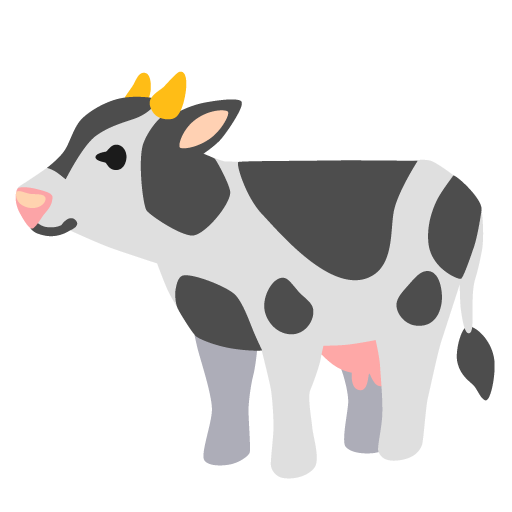
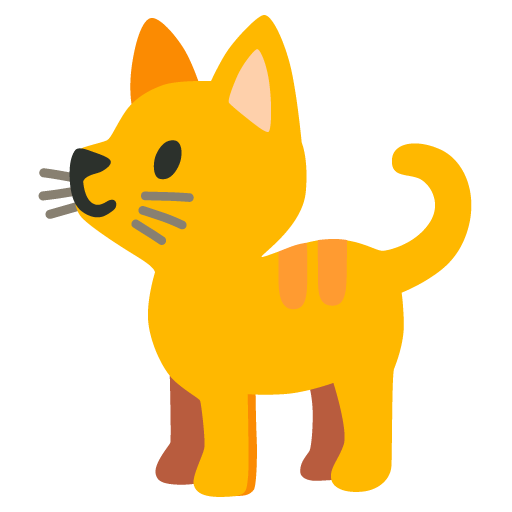 The cat gave the apple to the rabbit
 ←
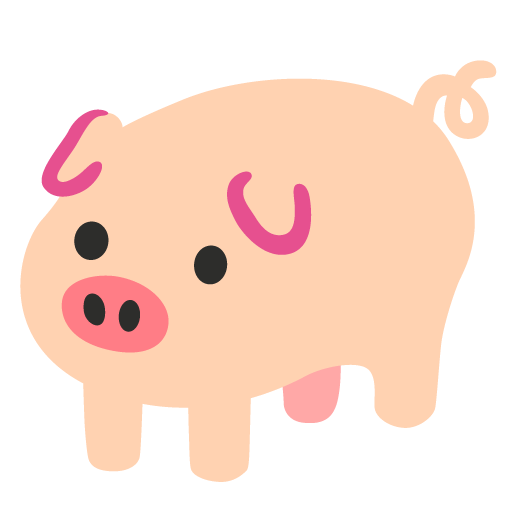 The pig gave the cake to the cow
What it measures
Measures structural priming: people tend to reuse a sentence structure they have just used. Participants type the ends of English sentences about pictures of one animal giving an object to another. Each prime's start invites "to the rabbit" or "the apple", and the next sentence allows either. The main score is the share of those next sentences that repeat the prime's structure.
Constructs
- Structural priming
- Sentence production
- Syntactic representation
- Implicit learning of language
Research uses
- Psycholinguistics and language production research
- Bilingualism and second-language research
- Within-study comparison of groups and conditions
How the paradigm works
The Structural Priming Task measures structural priming: people tend to reuse a sentence structure they have just used. Bock (1986) showed that speakers who had just repeated a sentence in one of two structures then described an unrelated picture in the same structure more often, and Pickering and Branigan (1998) found the same in written sentence completion. This task uses that written form with typed endings, as in Corley and Scheepers' (2002) web study, and adds a picture to every sentence. Each screen shows one animal giving an object to another, with the start of an English sentence about it and a box for the ending, and no time limit.
More about the paradigm
A prime's start names the object after the verb ("The cat gave the apple"), which invites a prepositional object ("to the rabbit"), or the animal receiving it ("The cat gave the rabbit"), which invites a double object ("the apple"). The target comes right after, because priming in written completion fades within a sentence or two (Branigan, Pickering and Cleland 1999), and its start stops at the verb ("The pig gave"), so either structure can follow. By default there are 16 pairs (12 or 24 as a setting), each after two fillers, pictures of one animal chasing, pushing, pulling or carrying another; half the primes invite each structure. The verbs are gave, handed, showed and offered. By default the target repeats its prime's verb, which gives a larger effect (Pickering and Branigan 1998); as a setting it takes another verb, which tests structure alone. Every pair shows four different animals and two different objects, the pictures are Noto Emoji on scenes our code draws, and the session's seed orders everything. Two practice sentences come first.
Each ending is scored by rule from the typed words: a prepositional object is a noun phrase, then "to" and the animal receiving; a double object is the animal receiving, then a noun phrase; anything else is neither. One spelling slip is accepted in an animal's name of four or more letters. The primary score is the structure repetition rate: over the pairs whose prime and target were both completed in one of the two structures, the share of targets that repeat the prime's structure. Because half the primes invite each structure, it is 0.5 without priming whatever structure the person prefers. Scores also give the share of prepositional objects after each kind of prime and their difference, the person's preference, the share of targets in neither structure, the share of primes completed as invited and the time to the first typed letter, which Corley and Scheepers found shorter for targets that repeat the prime. The sentences are English; sessions run in other languages are flagged for review. With 16 pairs, one person's rate is noisy, so the measure suits group comparisons best. Scores support research and do not diagnose.
Scores
- Structure Repetition Rate%
- Share of targets that repeat their prime's structure, over the pairs with both sentences completed as a prepositional or a double object.
- Above 0.5 means structures were repeated more than chance
- Prepositional Objects After Prepositional Primes%
- Share of prepositional objects among the scored targets after a prime completed as a prepositional object.
- Compare with the next score
- Prepositional Objects After Double Object Primes%
- Share of prepositional objects among the scored targets after a prime completed as a double object.
- Compare with the previous score
- Priming Effect%
- Share of prepositional objects after prepositional primes minus after double object primes.
- Positive means targets followed their primes
- Prepositional Object Preference%
- Share of prepositional objects among all targets completed in one of the two structures.
- The person's preference between the two structures
- Targets in Neither Structure%
- Share of targets completed in neither structure.
- Context for the scores
- Primes as Invited%
- Share of primes completed in the structure their start invites.
- Under 0.8 is flagged for review
- Median Time to First Letterms
- Median time from a scored target's appearance to its first typed letter, leaving out times under 100 ms.
- Context for the scores
- Repetition Speed Advantagems
- Median time to the first letter of targets in the other structure minus targets that repeat their prime's.
- Positive means repeats were started faster
- Scored Pairscount
- Pairs whose prime and target were both completed in one of the two structures.
- Fewer than 4, or a quarter of those planned, is invalid
- Pairs Completedcount
- Pairs whose prime and target were both answered.
- Fewer than 90% of those planned is invalid
- Pairs Plannedcount
- Prime and target pairs the session set out to show.
- 12, 16 or 24
- Answers Under 100 mscount
- Sentences ended within 100 ms of appearing.
- Expected to be 0
- Paste Attemptscount
- Blocked attempts to paste or drop text into the box.
- Any is flagged for review
- Session in Another Language0/1
- 1 when the session ran in a language other than English.
- 1 is flagged for review
Use and evidence
367 papers from 2021 to 2025 name this task in their title or abstract, up 6% compared with 2016 to 2020. That ranks it 73 of 495 test families in our census. See the counts for every test.
Show the numbers
| Year | Papers |
|---|---|
| 2025 | 83 |
| 2024 | 64 |
| 2023 | 81 |
| 2022 | 72 |
| 2021 | 67 |
| 2020 | 69 |
| 2019 | 67 |
| 2018 | 58 |
| 2017 | 87 |
| 2016 | 64 |
| 2015 | 66 |
| 2014 | 50 |
| 2013 | 61 |
| 2012 | 54 |
| 2011 | 60 |
| 2010 | 44 |
| 2009 | 42 |
| 2008 | 36 |
| 2007 | 33 |
| 2006 | 21 |
| 2005 | 15 |
| 2004 | 10 |
| 2003 | 12 |
| 2002 | 7 |
| 2001 | 5 |
| 2000 | 8 |
Use grade B
300 to 999 papers from 2021 to 2025.
Evidence grade D
Little published measurement evidence found.
- Papers on test-retest reliability
- 1
- Papers on reliability or validity
- 25
- Registered clinical studies using it as an outcome
- 2
Note on the counts: includes spoken studies and theory papers.
How the grades work
Use: A is 1,000 or more papers from 2021 to 2025, B 300 to 999, C 100 to 299, D 30 to 99 and E fewer than 30. Evidence: A means at least 25 papers report its test-retest reliability and at least 25 registered clinical studies use it as an outcome; B, at least 8 test-retest papers, and either 5 registered clinical studies or 150 reliability or validity papers; C, at least 2 test-retest papers, 30 reliability or validity papers or 3 registered clinical studies; D, little published measurement evidence found. The counts measure use. They include every paper that names the task in its title or abstract. Grades describe the published research on this task, not ConductCognition's version of it.
Source: ConductCognition test census 0.22.0, counted 3 November 2026 from OpenAlex and ClinicalTrials.gov.
Task design
The trial sequence as the test runs in ConductCognition.
- Pictures
- One animal giving an object to another: 6 animals and 8 objects from Noto Emoji, a freely licensed set, on scenes our code draws, with an arrow from the giver to the receiver.
- Sentences
- Each picture comes with the start of an English sentence and a box for the ending, with no time limit. A prime's start names the object or the animal receiving it (The cat gave the apple ..., The cat gave the rabbit ...), inviting "to the rabbit" or "the apple". The target's start stops at the verb (The pig gave ...), so either structure can follow.
- Order
- 16 pairs by default, or 12 or 24 as a setting, each a prime and its target after 2 fillers, pictures of one animal chasing, pushing, pulling or carrying another. Half the primes invite each structure, with no more than 3 of one kind in a row.
- Verbs
- Gave, handed, showed and offered, each inviting both structures equally often. The target takes its prime's verb by default, or another verb as a setting.
- Practice
- 2 practice sentences, each shown back to the participant.
- Scoring
- Each ending is scored by rule from the typed words as a prepositional object (the apple to the rabbit), a double object (the rabbit the apple) or neither. One spelling slip is accepted in an animal's name of 4 or more letters.
- Score
- The share of targets that repeat their prime's structure, over the pairs with both sentences in one of the two structures.
The scenes, sentence starts and scoring rule were written for this task; no published item set is used. The sentences are English, and sessions run in other languages are flagged for review.
Quality checks
Each session is marked valid, needs review or invalid, with the reason, before you see its scores.
Scored rows: structural_priming_target from the scored run, one typed ending per sentence with no time limit, each with the prime before it from the same run. Either structure is a valid answer, so there is no chance level and accuracy is not judged, and the same structure throughout is a preference, not an error. Fewer than 90% of the planned pairs completed invalidates, and so do fewer than 4 pairs, or a quarter of those planned, with both sentences completed in one of the two structures. Answers under 200 ms on at least half of 4 or more targets invalidate. Under 80% of primes completed the way their start invites, a blocked paste, or a session run in another language are flagged for review.
Why these rules
There is no correct option to compare with chance, so accuracy is not judged against chance. The score compares each target with the prime before it, so it needs most of the pairs and enough of them in the two structures; Corley and Scheepers (2002) left out participants who completed over 90% of primes or targets in neither, and Kaschak, Kutta and Jones (2011) those who completed fewer than 80% of primes as intended. The limits here are ConductScience choices on those lines. A blocked paste can mean answers were copied. An answer under 200 ms is faster than a simple visual reaction, so it cannot reflect the item. Following response-time effort screening for untimed tests (Wise and Kong 2005), the session is invalid only when at least half the answers are that fast. The word lists are English. A session run in another language shows English words to a participant who may not read English fluently, so it is flagged for review.
No percentile. Scores and quality flags only.
Running this test
Settings you can change
| Setting | Standard | Allowed |
|---|---|---|
| Sentence pairs | 16 pairs (64 sentences, standard) | 12 pairs (48 sentences), 16 pairs (64 sentences, standard), 24 pairs (96 sentences) |
| Verb after the prime | Same verb as the prime (standard) | Same verb as the prime (standard), A different verb |
Yearly plans can change settings within these limits. Free and pay-as-you-go studies use the standard settings.
Need a setting this test does not have?
Devices and languages
- Untimed test: runs on desktops, laptops, tablets and phones. Participant devices
- Instructions and screens: English, Spanish, French, German, Italian, Portuguese (Brazil), Chinese (Simplified) and Japanese. Words and sentences: English.
- Available on: Every plan, including the free plan.
- No percentile. Scores and quality flags only. How norms work
- Recruiting online? See the setup guides for Prolific, Sona Systems, CloudResearch Connect and Qualtrics.
Cite and describe
Participants completed the Structural Priming Task in a web browser (ConductCognition task version 1.0.0, scoring version 1.0.0; Bock, 1986; Pickering & Branigan, 1998), with the standard settings (sentence pairs: 16 pairs (64 sentences, standard); verb after the prime: Same verb as the prime). The main score was structure repetition rate (share of targets that repeat their prime's structure, over the pairs with both sentences completed as a prepositional or a double object).
ConductCognition versions: task version 1.0.0, scoring version 1.0.0. Every export records the versions each session used, for a methods section.
- Bock, J. K. (1986). Syntactic persistence in language production. Cognitive Psychology, 18(3), 355-387. https://doi.org/10.1016/0010-0285(86)90004-6
- Pickering, M. J., & Branigan, H. P. (1998). The representation of verbs: Evidence from syntactic priming in language production. Journal of Memory and Language, 39(4), 633-651. https://doi.org/10.1006/jmla.1998.2592Written sentence completion, the prime fragments, the scoring of completions and the larger effect with the same verb.
- Corley, M., & Scheepers, C. (2002). Syntactic priming in English sentence production: Categorical and latency evidence from an Internet-based study. Psychonomic Bulletin & Review, 9(1), 126-131. https://doi.org/10.3758/BF03196267Typed completions on the web, two fillers before each pair, and faster targets that repeat the prime.
- Branigan, H. P., Pickering, M. J., & Cleland, A. A. (1999). Syntactic priming in written production: Evidence for rapid decay. Psychonomic Bulletin & Review, 6(4), 635-640. https://doi.org/10.3758/BF03212972Why the target comes right after its prime.
- Pickering, M. J., & Ferreira, V. S. (2008). Structural priming: A critical review. Psychological Bulletin, 134(3), 427-459. https://doi.org/10.1037/0033-2909.134.3.427Review of structural priming.
Source papers
- Bock JK (1986). Syntactic persistence in language production. Cognitive Psychology, 18(3):355-387.Paradigm source, Adults
- Pickering MJ, Branigan HP (1998). The representation of verbs: evidence from syntactic priming in language production. Journal of Memory and Language, 39(4):633-651.Paradigm source, Adults
- Corley M, Scheepers C (2002). Syntactic priming in English sentence production: categorical and latency evidence from an Internet-based study. Psychonomic Bulletin & Review, 9(1):126-131.Paradigm source, Ages 15 to 61
Questions
How long does the Structural Priming Task take?
About 8 to 12 minutes, as listed in the test library.
What device does a participant need?
Untimed test: runs on desktops, laptops, tablets and phones. The browser must be Chrome, Edge, Firefox or Safari.
What scores does it produce?
Structure Repetition Rate, Prepositional Objects After Prepositional Primes, Prepositional Objects After Double Object Primes, Priming Effect, Prepositional Object Preference, Targets in Neither Structure, Primes as Invited, Median Time to First Letter, Repetition Speed Advantage, Scored Pairs, Pairs Completed, Pairs Planned, Answers Under 100 ms, Paste Attempts and Session in Another Language. Each session is also marked valid, needs review or invalid, with the reason.
How widely is the Structural Priming Task used in research?
367 papers from 2021 to 2025 name it in their title or abstract, up 6% compared with 2016 to 2020. That ranks it 73 of 495 test families in the ConductCognition test census (use grade B). Source: ConductCognition test census 0.22.0, counted 3 November 2026 from OpenAlex and ClinicalTrials.gov.
How much reliability evidence does the Structural Priming Task have?
In the published research, 1 paper reports its test-retest reliability and 2 registered clinical studies use it as an outcome (evidence grade D in the ConductCognition test census).
Does it report a percentile?
No. Scores and quality flags only.
Which settings can a researcher change?
Sentence pairs (12 pairs (48 sentences), 16 pairs (64 sentences, standard), 24 pairs (96 sentences)) and verb after the prime (Same verb as the prime (standard), A different verb). Settings can be changed on yearly plans; free and pay-as-you-go studies use the standard settings.
Which languages can participants use?
The instructions and screens are in English, Spanish, French, German, Italian, Portuguese (Brazil), Chinese (Simplified) and Japanese. The words and sentences stay in English, so sessions in other languages are flagged for review. English is on every plan, and the other languages come with yearly plans. Have a native speaker read the machine-translated text before launch.
Is this a clinical test?
No. ConductCognition is for research use only. It runs, scores and exports the test; clinical interpretation is outside the platform.
Every test: the full test list.
Run this test in your next study
Start free with 10 free participants on any test, then use participant credits or a yearly plan.