Executive Function
Sensory Preconditioning Task
Also called: sensory preconditioning paradigm, preference by association task, preconditioned preference task, mediated value transfer task, sensory pre-conditioning task
Measure whether a learned reward spreads through memory: participants see pictures in pairs, learn which earn points, then choose between their never-rewarded partners.
8-11 minUntimed
Free to start: 10 free participants per account, then $0.99 per participant for academic research, or any yearly plan. Try it here first, with no account.
- Papers, 2021 to 2025
- 76
- Evidence grade
- D
- Registered clinical studies
- 1
What it measures
Measures whether a learned reward spreads to a picture seen with the rewarded one. Participants see pairs of pictures, learn which pictures earn points, then choose between their partners. The main score is the share of choices for the picture whose partner earned points, with the preference for the points pictures themselves next.
Constructs
- Sensory preconditioning
- Memory-based decision making
- Associative learning
- Value transfer
Research uses
- Research on memory-based decisions and the hippocampus
- Research on how value spreads through learned associations
- Within-study comparison of direct and carried-over preferences
How the paradigm works
Sensory preconditioning is learning that two neutral things go together before either predicts anything: when one of them later comes to predict an outcome, the other brings the outcome to mind too, though it was never paired with it. Brogden (1939) described it in dogs, and most studies since have been in animals. In people, Wimmer and Shohamy (2011, 2012) paired pictures, then rewarded one picture of each pair, and found that people later chose the never-rewarded partners of rewarded pictures more often; the bias was predicted by activity in the hippocampus and the reactivation of associated memories. Liashenko and colleagues (2020) found the same preference with faces, though people could not tell which faces had come together. The human version measures whether a value learned for one item spreads through memory to an item linked with it before, which was never rewarded itself.
More about the paradigm
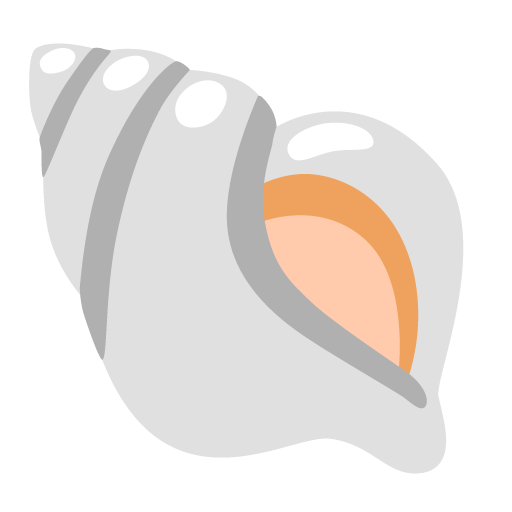
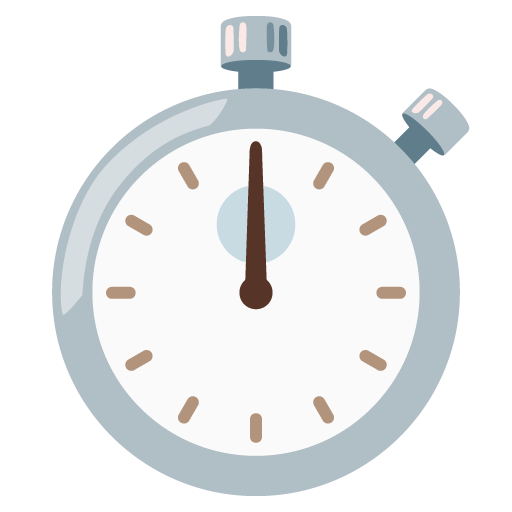
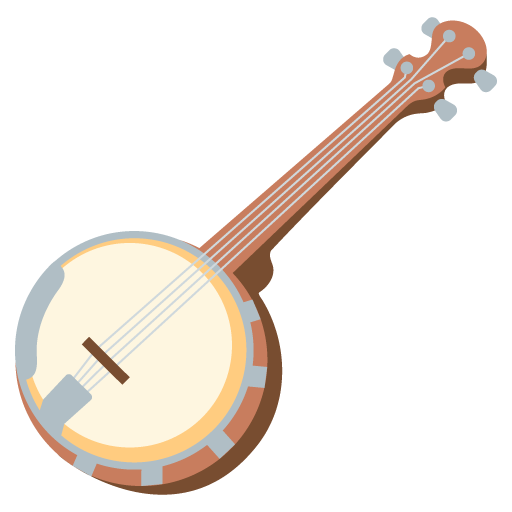
This test follows that design with Noto emoji pictures of everyday objects in 8 pairs. In 56 pairing turns a first picture shows for 1,000 ms, then after a 300 ms blank a second picture, and the participant says whether the second is the same as the first, by click, tap, or the F and J keys; each pair comes 6 times, and two other pictures shown twice in a row make Same the right answer in 8 turns (the check of Wang, Schoenbaum and Kahnt, 2020). Nothing says the pictures come in pairs. In the points part each second picture appears alone 8 times: the participant predicts Points or No points, then sees what it earned. The second pictures of 4 pairs earn the set points (standard 10) on 6 of their 8 showings, and the other 4 never do. Then 48 choices without feedback ask which of two pictures is more likely to earn points: 32 between first pictures, which never earned points, one from a points pair and one from another pair, and 16 between second pictures. A pair test closes the session: each first picture above its own second picture and the second picture of another pair that earned the same, twice each. Which pictures make which pair, which pairs earn points and every order come from the session's seed. About 8 to 11 minutes.
The main score is the preconditioned preference: the share of choices between first pictures that pick the one whose partner earned points; 0.5 is no preference. The preference for the points pictures themselves, accuracy in the pair test, the late points predictions and the pairing check come next. A session that chose the points pictures in fewer than 75% of their choices is flagged for review, because a preference among their partners then means little. One person's preference is noisy, so compare groups. Scores support research and do not diagnose.
Scores
- Preconditioned Preference%
- Share of the 32 choices between first pictures, which never earned points, that pick the one whose partner earned points.
- Above 0.5: value carried over to the partners; 0.5 is no preference
- Points Picture Preference%
- Share of the 16 choices between second pictures that pick the one that earned points.
- Under 0.75 is flagged for review
- Pair Memory Accuracy%
- Share of right answers in the pair test: a first picture above its own second picture and another pair's.
- 0.5 is chance
- Points Learning Accuracy%
- Share of the last 32 points predictions that predict points for the pictures that earn them and no points for the others.
- Higher means the points were learned
- Pairing Check Accuracy%
- Share of the 56 pairing turns answered Same or Different rightly.
- Quality check
- Median First-Picture Choice Timems
- Median time to choose between two first pictures.
- Informational; the task has no time limit
- Median Second-Picture Choice Timems
- Median time to choose between two second pictures.
- Informational
- Points Wonpoints
- Points the pictures brought in the points part.
- Informational
- Anticipationscount
- Presses within 100 ms of the buttons appearing. They are not taken as answers.
- Quality check
- Choices Madecount
- Choices between two pictures in the scored run.
- Fewer than planned is flagged for review
- Planned Choicescount
- Choices planned: 48.
- Informational
Use and evidence
76 papers from 2021 to 2025 name this task in their title or abstract, up 77% compared with 2016 to 2020. That ranks it 249 of 495 test families in our census. See the counts for every test.
Show the numbers
| Year | Papers |
|---|---|
| 2025 | 25 |
| 2024 | 7 |
| 2023 | 10 |
| 2022 | 17 |
| 2021 | 17 |
| 2020 | 8 |
| 2019 | 9 |
| 2018 | 6 |
| 2017 | 12 |
| 2016 | 8 |
| 2015 | 3 |
| 2014 | 4 |
| 2013 | 10 |
| 2012 | 12 |
| 2011 | 8 |
| 2010 | 10 |
| 2009 | 10 |
| 2008 | 1 |
| 2007 | 2 |
| 2006 | 6 |
| 2005 | 6 |
| 2004 | 5 |
| 2003 | 6 |
| 2002 | 6 |
| 2001 | 5 |
| 2000 | 4 |
Use grade D
30 to 99 papers from 2021 to 2025.
Evidence grade D
Little published measurement evidence found.
- Papers on test-retest reliability
- 0
- Papers on reliability or validity
- 7
- Registered clinical studies using it as an outcome
- 1
Note on the counts: many counted papers are animal studies.
How the grades work
Use: A is 1,000 or more papers from 2021 to 2025, B 300 to 999, C 100 to 299, D 30 to 99 and E fewer than 30. Evidence: A means at least 25 papers report its test-retest reliability and at least 25 registered clinical studies use it as an outcome; B, at least 8 test-retest papers, and either 5 registered clinical studies or 150 reliability or validity papers; C, at least 2 test-retest papers, 30 reliability or validity papers or 3 registered clinical studies; D, little published measurement evidence found. The counts measure use. They include every paper that names the task in its title or abstract. Grades describe the published research on this task, not ConductCognition's version of it.
Source: ConductCognition test census 0.22.0, counted 3 November 2026 from OpenAlex and ClinicalTrials.gov.
Task design
The trial sequence as the test runs in ConductCognition.
- Pictures
- 16 Noto emoji pictures of everyday objects in 8 pairs, a first and a second picture, 2 more shown twice in a row in the pairing check, and 3 in practice. Which pictures make which pair, and which 4 pairs earn points, comes from the session's seed.
- Pairing
- 56 turns: each pair 6 times and each check picture 4 times. The first picture for 1,000 ms, a 300 ms blank, then the second picture with Same and Different, by click, tap, or F and J, with no time limit. Nothing says the pictures come in pairs. 2 practice turns with feedback come first.
- Points
- Each second picture alone 8 times, in a seeded order: the participant predicts Points or No points, then sees what it earned for 1,200 ms. The second pictures of 4 pairs earn the set points (10 by default, 1 to 100 as a setting) on 6 of their 8 showings; the others never do.
- Choices
- 48 choices with no feedback, "Which picture is more likely to earn points?": each first picture of a points pair against each first picture of another pair, with each picture on each side (32), and each second picture of a points pair against each other second picture once (16). No picture comes in two choices running.
- Pair test
- Each first picture above its own second picture and the second picture of another pair that earned the same, twice, with no feedback (16).
- Scores
- The preconditioned preference (the share of choices between first pictures that pick the one whose partner earned points), the preference for the points pictures, pair test accuracy, the late points predictions and the pairing check.
Wimmer and Shohamy (2011) used scenes, fractals and money, and Liashenko and colleagues (2020) faces and a coin; this test uses Noto emoji objects and points, so its preferences are not directly comparable with theirs. One person's preference is noisy, so compare groups. The scores support research and do not diagnose.
Quality checks
Each session is marked valid, needs review or invalid, with the reason, before you see its scores.
Scored rows: sensory_preconditioning_choice from the scored run, a choice between two pictures with no time limit and no feedback. The chance checks use the choices between second pictures, where one picture earned points and the other never did (chance 50%); the choices between first pictures, which never earned points, are the measure. Accuracy below chance invalidates and accuracy not above chance is flagged. One side on 90% of choices invalidates when accuracy is not above chance; the picture that earned points is on each side equally often. Answers under 200 ms on at least half the choices invalidate. The points pictures chosen in fewer than 75% of their choices and a run short of its planned choices are flagged for review.
Why these rules
Accuracy significantly below chance (one-sided exact test, p < .05) cannot come from guessing; it means the response mapping was reversed or the task was not followed (Slick, Sherman and Iverson 1999 treat below-chance forced-choice performance as definite response bias). Chance-level accuracy can be a real result in impaired participants, so it is only flagged. One option on at least 90% of answered trials, when the correct options are balanced and accuracy is not above chance, means the answers did not depend on the items (the task counterpart of long-string responding in surveys; Curran 2016). An answer under 200 ms is faster than a simple visual reaction, so it cannot reflect the item. Following response-time effort screening for untimed tests (Wise and Kong 2005), the session is invalid only when at least half the answers are that fast. A preference among the first pictures can only come from the points their partners earned, so it means something once the points were learned: Wang, Schoenbaum and Kahnt (2020) left out participants whose last points predictions were not above chance, and Liashenko and colleagues (2020) read the preference beside the preference for the rewarded pictures themselves.
No percentile. Scores and quality flags only.
Running this test
Settings you can change
| Setting | Standard | Allowed |
|---|---|---|
| Points per win | 10 | 1 to 100 |
| Payment line | No mention of money (standard) | No mention of money (standard), The study pays for points |
Yearly plans can change settings within these limits. Free and pay-as-you-go studies use the standard settings.
Need a setting this test does not have?
Devices and languages
- Untimed test: runs on desktops, laptops, tablets and phones. Participant devices
- Languages: English, Spanish, French, German, Italian, Portuguese (Brazil), Chinese (Simplified) and Japanese.
- Available on: Every plan, including the free plan.
- No percentile. Scores and quality flags only. How norms work
- Recruiting online? See the setup guides for Prolific, Sona Systems, CloudResearch Connect and Qualtrics.
Cite and describe
Participants completed the Sensory Preconditioning Task in a web browser (ConductCognition task version 1.0.0, scoring version 1.0.0; Brogden, 1939; Wimmer & Shohamy, 2011, 2012; Liashenko et al., 2020), with the standard settings (points per win: 10; payment line: No mention of money). The main score was preconditioned preference (share of the 32 choices between first pictures, which never earned points, that pick the one whose partner earned points).
ConductCognition versions: task version 1.0.0, scoring version 1.0.0. Every export records the versions each session used, for a methods section.
- Brogden, W. J. (1939). Sensory pre-conditioning. Journal of Experimental Psychology, 25(4), 323-332. https://doi.org/10.1037/h0058944Sensory preconditioning first described: a stimulus paired with another before training comes to bring on the trained response.
- Wimmer, G. E., & Shohamy, D. (2011). The striatum and beyond: Contributions of the hippocampus to decision making. In M. R. Delgado, E. A. Phelps, & T. W. Robbins (Eds.), Decision making, affect, and learning: Attention and performance XXIII (pp. 281-310). Oxford University Press. https://doi.org/10.1093/acprof:oso/9780199600434.003.0013The human design: pairs shown one after the other with a cover task, one picture of each pair rewarded, then choices between the others.
- Wimmer, G. E., & Shohamy, D. (2012). Preference by association: How memory mechanisms in the hippocampus bias decisions. Science, 338(6104), 270-273. https://doi.org/10.1126/science.1223252People later chose the never-rewarded partners of rewarded pictures, a bias predicted by hippocampal activity and the reactivation of associated memories.
- Liashenko, A., Dizaji, A. S., Melloni, L., & Schwiedrzik, C. M. (2020). Memory guidance of value-based decision making at an abstract level of representation. Scientific Reports, 10(1), 21496. https://doi.org/10.1038/s41598-020-78460-6The same preference with faces and a coin, while recognition of the pairs was at chance.
- Wang, F., Schoenbaum, G., & Kahnt, T. (2020). Interactions between human orbitofrontal cortex and hippocampus support model-based inference. PLoS Biology, 18(1), e3000578. https://doi.org/10.1371/journal.pbio.3000578The pairing check, Same or Different for the second picture of each turn, in a human sensory preconditioning task with predictions of reward.
Source papers
- Wimmer GE, Shohamy D (2011). The striatum and beyond: Contributions of the hippocampus to decision making. In Delgado MR, Phelps EA, Robbins TW (Eds.), Decision Making, Affect, and Learning: Attention and Performance XXIII (pp. 281-310). Oxford University Press.N 22, 18-32 years
- No normative data for this task.Paradigm source, N/A
Questions
How long does the Sensory Preconditioning Task take?
About 8 to 11 minutes, as listed in the test library.
What device does a participant need?
Untimed test: runs on desktops, laptops, tablets and phones. The browser must be Chrome, Edge, Firefox or Safari.
What scores does it produce?
Preconditioned Preference, Points Picture Preference, Pair Memory Accuracy, Points Learning Accuracy, Pairing Check Accuracy, Median First-Picture Choice Time, Median Second-Picture Choice Time, Points Won, Anticipations, Choices Made and Planned Choices. Each session is also marked valid, needs review or invalid, with the reason.
How widely is the Sensory Preconditioning Task used in research?
76 papers from 2021 to 2025 name it in their title or abstract, up 77% compared with 2016 to 2020. That ranks it 249 of 495 test families in the ConductCognition test census (use grade D). Source: ConductCognition test census 0.22.0, counted 3 November 2026 from OpenAlex and ClinicalTrials.gov.
How much reliability evidence does the Sensory Preconditioning Task have?
In the published research, 0 papers report its test-retest reliability and 1 registered clinical study uses it as an outcome (evidence grade D in the ConductCognition test census).
Does it report a percentile?
No. Scores and quality flags only.
Which settings can a researcher change?
Points per win (1 to 100) and payment line (No mention of money (standard), The study pays for points). Settings can be changed on yearly plans; free and pay-as-you-go studies use the standard settings.
Which languages can participants use?
Participants can take this test in English, Spanish, French, German, Italian, Portuguese (Brazil), Chinese (Simplified) and Japanese. English is on every plan, and the other languages come with yearly plans. Have a native speaker read the machine-translated text before launch.
Is this a clinical test?
No. ConductCognition is for research use only. It runs, scores and exports the test; clinical interpretation is outside the platform.
Every test: the full test list.
Run this test in your next study
Start free with 10 free participants on any test, then use participant credits or a yearly plan.