Episodic Memory
Object Location Memory Task
Also called: object relocation task, object-location memory test, what-where memory task
Measure memory for where things are: pictures shown in places on a board are put back where they were, scored by how far each one lands from its place.
7-10 minUntimed
Free to start: 10 free participants per account, then $0.99 per participant for academic research, or any yearly plan. Preview any test free after you sign up.
- Papers, 2021 to 2025
- 193
- Evidence grade
- C
- Registered clinical studies
- 2

What it measures
Measures memory for where objects were. Pictures show in places on a board; the board then empties, and each picture is put back where it was. Scores how far each one lands from its place.
Constructs
- Object location memory
- Spatial memory
- Object-to-location binding
- Episodic memory
Research uses
- Research on memory in Alzheimer's disease, mild cognitive impairment and Korsakoff's syndrome
- Aging and memory research
- Studies of sex differences and individual differences in spatial memory
How the paradigm works
The Object Location Memory Task measures memory for where things are. Pictures of everyday objects and animals appear in places on a square board. After a fixed time the board empties, the pictures appear in a row above it, and the participant puts each picture back where it was: by dragging it, by tapping it and then its place, or with the arrow keys. Pictures can be moved again until the participant chooses Done, with no time limit.
More about the paradigm
The task follows the object relocation task of Postma and De Haan (1996) in the computer form of Kessels, Postma and de Haan (1999), as used by Postma et al. (2018) and Poos et al. (2021): 10 pictures on each board, shown for 30 seconds, and a practice board of 4. The standard session has 4 boards with new pictures in new places; settings give 2 to 5 boards, 6 to 10 pictures per board and 10 to 60 seconds of study. The practice board ends with a picture of how far each picture landed from its place; the test boards give no feedback. Places are drawn at random for each session, at least a fifth of the board apart.
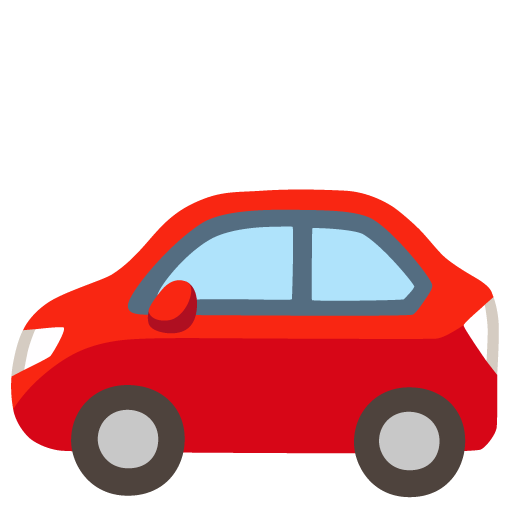
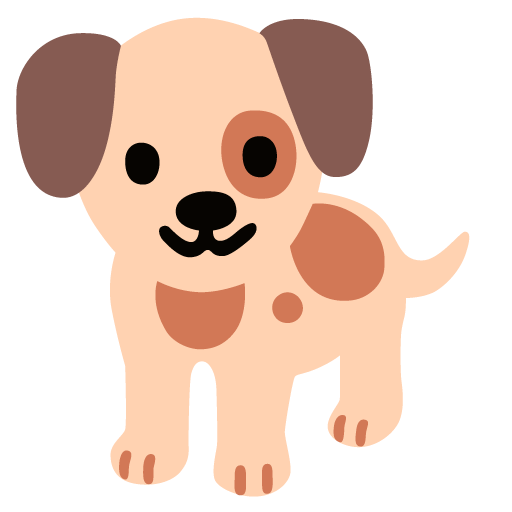
The pictures are 63 Noto Emoji pictures of everyday objects and animals, the set of the library's Picture Naming Test. Each session draws its pictures at random, with no picture shown twice.
The main score is the mean placement error: the distance between where each picture was and where it was put back, as a percent of the board's side, so it does not depend on the screen's size. The best-fit error is the same distance under the pairing of placed pictures with places that fits best, whichever picture went where; it measures memory for the places themselves (Kessels et al. 1999). The share of pictures put back within 2/15 of the side of their place (20 mm in a 15 cm square, as in Linssen et al. 2012) and the share that the best fit gives another picture's place, a sign that the right places held the wrong pictures, are also reported, with the error that random placements would give. Scores support research and do not diagnose.
Scores
- Mean Placement Error%
- Mean distance between where each picture was and where it was put back, as a percent of the board's side.
- Lower is better
- Best-Fit Error%
- Mean distance under the pairing of placed pictures with places that gives the smallest total distance, whichever picture went where. Measures memory for the places themselves.
- Lower is better
- Correct Placements%
- Share of pictures put back within 2/15 of the board's side of their place.
- Higher is better
- Swapped Pictures%
- Share of pictures that the best fit gives another picture's place: the places were found but the pictures mixed up.
- Lower is better
- Chance Error%
- The mean placement error that putting every picture at a random place on the board would give.
- Comparison for the mean placement error
- Median Board Timems
- Median time from the board emptying to Done.
- Informational; the task is untimed
- Extra Movescount
- Times a picture was moved again after it was first put on the board.
- Informational
- Anticipationscount
- Pictures first placed under 100 ms after the board emptied or after the placement before.
- Informational
- Boards Scoredcount
- Test boards recorded in the scored run (4 at the standard settings).
- Informational
- Pictures Scoredcount
- Pictures put back on the scored boards (40 at the standard settings).
- Informational
Use and evidence
193 papers from 2021 to 2025 name this task in their title or abstract, up 24% compared with 2016 to 2020. That ranks it 126 of 395 test families in our census. See the counts for every test.
Show the numbers
| Year | Papers |
|---|---|
| 2025 | 49 |
| 2024 | 39 |
| 2023 | 33 |
| 2022 | 38 |
| 2021 | 34 |
| 2020 | 34 |
| 2019 | 34 |
| 2018 | 36 |
| 2017 | 25 |
| 2016 | 27 |
| 2015 | 16 |
| 2014 | 19 |
| 2013 | 18 |
| 2012 | 11 |
| 2011 | 9 |
| 2010 | 10 |
| 2009 | 9 |
| 2008 | 6 |
| 2007 | 4 |
| 2006 | 3 |
| 2005 | 0 |
| 2004 | 3 |
| 2003 | 1 |
| 2002 | 2 |
| 2001 | 1 |
| 2000 | 0 |
Use grade C
100 to 299 papers from 2021 to 2025.
Evidence grade C
At least 2 test-retest papers, 30 reliability or validity papers or 3 registered clinical studies.
- Papers on test-retest reliability
- 2
- Papers on reliability or validity
- 14
- Registered clinical studies using it as an outcome
- 2
How the grades work
Use: A is 1,000 or more papers from 2021 to 2025, B 300 to 999, C 100 to 299, D 30 to 99 and E fewer than 30. Evidence: A means at least 25 papers report its test-retest reliability and at least 25 registered clinical studies use it as an outcome; B, at least 8 test-retest papers, and either 5 registered clinical studies or 150 reliability or validity papers; C, at least 2 test-retest papers, 30 reliability or validity papers or 3 registered clinical studies; D, little published measurement evidence found. The counts measure use. They include every paper that names the task in its title or abstract. Grades describe the published research on this task, not ConductCognition's version of it.
Source: ConductCognition test census 0.14.0, counted 31 October 2026 from OpenAlex and ClinicalTrials.gov.
Task design
The trial sequence as the test runs in ConductCognition.
- Pictures
- 63 emoji pictures of everyday objects and animals from Noto Emoji, the Picture Naming Test's set. Each session draws its pictures at random, with none shown twice.
- Boards
- 4 boards (standard; 2 to 5), each with 10 pictures (standard; 6 to 10) in places at least a fifth of the board apart, shown for 30 seconds (standard; 10 to 60) after 1,000 ms of empty board.
- Putting back
- The board empties and the pictures appear in a row above it. Each picture is dragged to its place, tapped and then its place tapped, or moved with the arrow keys, and can be moved again until Done. No time limit.
- Practice
- One board of 4 pictures shown for 12 seconds, then a drawing of how far each picture landed from its place.
- Scoring
- Distances are a percent of the board's side. A picture within 2/15 of the side of its place counts as correctly placed.
The object relocation studies measured errors in millimeters on one screen. Here the board fits the screen, so errors are a percent of its side.
Quality checks
Each session is marked valid, needs review or invalid, with the reason, before you see its scores.
Scored rows: object_location_test from the scored run, one per board, with each picture's shown place and where it was put back. A placement has no correct option to compare with chance, so accuracy is not judged against chance. First placements made under 200 ms after the screen opened or after the placement before, on at least half of the pictures, invalidate. A mean placement error at or above the error of placing at random is flagged, and so is a run with fewer boards than planned; both withhold the percentile. A hidden tab withholds the percentile.
Why these rules
There is no correct option to compare with chance, so accuracy is not judged against chance. An answer under 200 ms is faster than a simple visual reaction, so it cannot reflect the item. Following response-time effort screening for untimed tests (Wise and Kong 2005), the session is invalid only when at least half the answers are that fast. Pictures put back no closer than random placements carry no memory for the places; that can be a real result in impaired participants, so it is flagged rather than invalidated. A run cut short averages the error over fewer boards than planned. A hidden tab lets the study, delay or response timers run without the participant, so a percentile is withheld after one.
Running this test
Settings you can change
| Setting | Standard | Allowed |
|---|---|---|
| Boards | 4 | 2 to 5 |
| Pictures per board | 10 | 6 to 10 |
| Study time (seconds) | 30 | 10 to 60 |
Yearly plans can change settings within these limits. Free and pay-as-you-go studies use the standard settings.
Need a setting this test does not have?
Devices and languages
- Untimed test: runs on desktops, laptops and tablets. Participant devices
- Languages: English, Spanish, French, German, Italian, Portuguese (Brazil), Chinese (Simplified) and Japanese.
- Available on: Every plan, including the free plan.
- Recruiting online? See the setup guides for Prolific, Sona Systems, CloudResearch Connect and Qualtrics.
Cite and describe
Participants completed the Object Location Memory Task in a web browser (ConductCognition task version 1.0.0, scoring version 1.0.0; Postma & De Haan, 1996; Kessels, Postma & de Haan, 1999), with the standard settings (boards: 4; pictures per board: 10; study time (seconds): 30). The main score was mean placement error (mean distance between where each picture was and where it was put back, as a percent of the board's side).
ConductCognition versions: task version 1.0.0, scoring version 1.0.0. Every export records the versions each session used, for a methods section.
- Postma, A., & De Haan, E. H. F. (1996). What was where? Memory for object locations. The Quarterly Journal of Experimental Psychology Section A, 49(1), 178-199. https://doi.org/10.1080/713755605
- Kessels, R. P. C., Postma, A., & de Haan, E. H. F. (1999). Object Relocation: A program for setting up, running, and analyzing experiments on memory for object locations. Behavior Research Methods, Instruments, & Computers, 31(3), 423-428. https://doi.org/10.3758/BF03200721The computer task, the absolute error and the best-fit error.
- Postma, A., Morel, S. G., Slot, M. E., Oudman, E., & Kessels, R. P. C. (2018). Forgetting the new locations of one's keys: Spatial-memory interference in Korsakoff's amnesia. Experimental Brain Research, 236(7), 1861-1868. https://doi.org/10.1007/s00221-018-5266-710 pictures for 30 seconds, put back from a row above the board, after a practice board of 4.
- Linssen, A. M., Vuurman, E. F., Sambeth, A., & Riedel, W. J. (2012). Methylphenidate produces selective enhancement of declarative memory consolidation in healthy volunteers. Psychopharmacology, 221(4), 611-619. https://doi.org/10.1007/s00213-011-2605-9A placement within 20 mm in a 15 cm square counted as correct.
Source papers
- Postma A, De Haan EHF (1996). What was where? Memory for object locations. The Quarterly Journal of Experimental Psychology Section A, 49(1):178-199.Paradigm source, Adults
- Kessels RPC, Postma A, de Haan EHF (1999). Object Relocation: a program for setting up, running, and analyzing experiments on memory for object locations. Behavior Research Methods, Instruments, & Computers, 31(3):423-428.Paradigm source, Adults
- Postma A, Morel SG, Slot ME, Oudman E, Kessels RPC (2018). Forgetting the new locations of one's keys: spatial-memory interference in Korsakoff's amnesia. Experimental Brain Research, 236(7):1861-1868.Paradigm source, Adults
- Poos JM, van der Ham IJM, Leeuwis AE, Pijnenburg YAL, van der Flier WM, Postma A (2021). Short digital spatial memory test detects impairment in Alzheimer's disease and mild cognitive impairment. Brain Sciences, 11(10):1350.N 64, Older adults
- Voyer D, Postma A, Brake B, Imperato-McGinley J (2007). Gender differences in object location memory: a meta-analysis. Psychonomic Bulletin & Review, 14(1):23-38.Paradigm source, Children and adults
Questions
How long does the Object Location Memory Task take?
About 7 to 10 minutes, as listed in the test library.
What device does a participant need?
Untimed test: runs on desktops, laptops and tablets. The browser must be Chrome, Edge, Firefox or Safari.
What scores does it produce?
Mean Placement Error, Best-Fit Error, Correct Placements, Swapped Pictures, Chance Error, Median Board Time, Extra Moves, Anticipations, Boards Scored and Pictures Scored. Each session is also marked valid, needs review or invalid, with the reason.
How widely is the Object Location Memory Task used in research?
193 papers from 2021 to 2025 name it in their title or abstract, up 24% compared with 2016 to 2020. That ranks it 126 of 395 test families in the ConductCognition test census (use grade C). Source: ConductCognition test census 0.14.0, counted 31 October 2026 from OpenAlex and ClinicalTrials.gov.
How much reliability evidence does the Object Location Memory Task have?
In the published research, 2 papers report its test-retest reliability and 2 registered clinical studies use it as an outcome (evidence grade C in the ConductCognition test census).
Which settings can a researcher change?
Boards (2 to 5), pictures per board (6 to 10) and study time (seconds) (10 to 60). Settings can be changed on yearly plans; free and pay-as-you-go studies use the standard settings.
Which languages can participants use?
Participants can take this test in English, Spanish, French, German, Italian, Portuguese (Brazil), Chinese (Simplified) and Japanese. English is on every plan, and the other languages come with yearly plans. Have a native speaker read the machine-translated text before launch.
Is this a clinical test?
No. ConductCognition is for research use only. It runs, scores and exports the test; clinical interpretation is outside the platform.
Every test: the full test list.
Run this test in your next study
Start free with 10 free participants on any test, then use participant credits or a yearly plan.