Social Cognition
Evaluative Conditioning Task
Also called: evaluative learning task, attitude conditioning task, picture-picture conditioning
Measure how liking is learned: participants rate abstract shapes before and after seeing each one beside pictures of liked food, spoiled food or plain objects.
8-10 minUntimed
Free to start: 10 free participants per account, then $0.99 per participant for academic research, or any yearly plan. Preview any test free after you sign up.
- Papers, 2021 to 2025
- 315
- Evidence grade
- C
- Registered clinical studies
- 4
What it measures
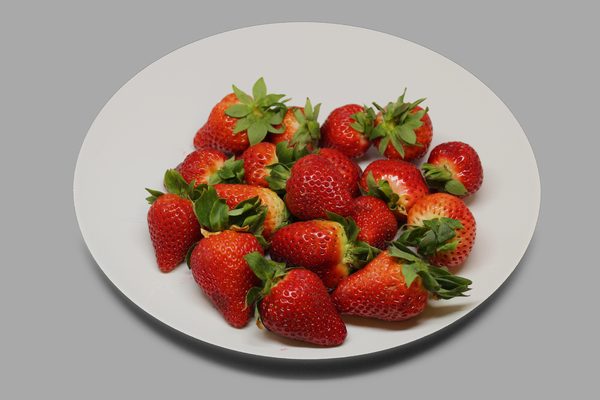
Measures how liking for a shape changes after it appears beside a liked or disliked picture. Participants rate abstract shapes, watch each one beside pictures of food, spoiled food or everyday objects, and rate the shapes again. Some pictures show spoiled food.
Constructs
- Evaluative learning
- Attitude formation
- Awareness of pairings
Research uses
- Attitude and preference research at the group level
- Associative learning studies
- Within-study comparison of learning with and without recall of the pairings
How the paradigm works
Evaluative conditioning is a change in how much people like something after it has been paired with something they like or dislike (De Houwer, Thomas and Baeyens, 2001). A meta-analysis of 214 studies found a mean effect of d = .52, stronger when people were aware of the pairings and on self-report measures (Hofmann and colleagues, 2010).
More about the paradigm
Participants first mark how much they like each of 12 abstract shapes on a bar from 0 to 100, with no numbers shown and no starting point. Each person's shapes are then dealt into 4 positive, 4 negative and 4 control shapes so the three sets start with nearly equal ratings. Each shape then appears 8 times (4 to 12 in the settings), in an order drawn for each session: alone for 1,000 ms, then beside its picture for 1,000 ms, then a blank of 1 to 2 seconds. Positive shapes appear with pictures of liked foods, negative shapes with pictures of spoiled food and control shapes with pictures of plain everyday objects. Participants simply watch. On one pairing of each shape a red dot appears with the picture, and they press the space bar or tap the screen. They then rate every shape again and, for each shape, say what kind of picture came with it: pleasant, unpleasant, neither or not sure. Practice with two other shapes comes first. The pictures come from CROCUFID, an open food picture set (Toet and colleagues, 2019), and show no people; the shapes were drawn by code for this task.
The main score, the conditioning effect, is the change in liking for positive shapes minus the change for negative shapes, in points. A larger effect means liking moved more toward the pictures; it is not better or worse performance. The task also reports the change in each class, the effect for shapes whose pairing was recalled and for those not recalled, correct pairing recall, attention checks passed and median rating time. Scores support research and do not diagnose.
Scores
- Conditioning Effectpoints
- Mean change in liking of the positive shapes minus the mean change of the negative shapes, on the 0 to 100 bar. A change is the second rating minus the first.
- Positive values mean liking moved toward the pictures; not better or worse
- Change, Positive Shapespoints
- Mean change in liking of the shapes shown with liked foods.
- Positive values mean liking rose
- Change, Negative Shapespoints
- Mean change in liking of the shapes shown with spoiled food.
- Negative values mean liking fell
- Change, Control Shapespoints
- Mean change in liking of the shapes shown with plain objects.
- A baseline for the other two changes
- Effect, Pairing Recalledpoints
- The conditioning effect over the shapes whose pairing the participant recalled. Blank when positive or negative shapes have none.
- Positive values mean liking moved toward the pictures
- Effect, Pairing Not Recalledpoints
- The conditioning effect over the shapes whose pairing the participant did not recall, counting not sure. Blank when positive or negative shapes have none.
- Positive values mean liking moved toward the pictures
- Pairing Recall%
- Share of shapes with the right answer about their picture: pleasant for positive shapes, unpleasant for negative shapes and neither for control shapes.
- Higher means more of the pairings were recalled
- Attention Checks Passed%
- Share of the pairings with the red dot on which the participant pressed after the dot appeared.
- Quality check
- Median Rating Timems
- Median time from the start of a rating screen to Confirm, leaving out times under 100 ms.
- Informational
- False Pressescount
- Presses during the pairings other than the one that passed a check.
- Quality check
- Ratings Givenitems
- Ratings in the scored run, out of 24.
- Quality check
- Longest Run of One Ratingitems
- Most shapes in a row given exactly the same rating.
- Quality check
- Anticipationscount
- Ratings confirmed within 100 ms of the start of the rating screen.
- Quality check
Use and evidence
315 papers from 2021 to 2025 name this task in their title or abstract, down 22% compared with 2016 to 2020. That ranks it 79 of 395 test families in our census. See the counts for every test.
Show the numbers
| Year | Papers |
|---|---|
| 2025 | 80 |
| 2024 | 69 |
| 2023 | 64 |
| 2022 | 59 |
| 2021 | 43 |
| 2020 | 88 |
| 2019 | 85 |
| 2018 | 77 |
| 2017 | 73 |
| 2016 | 80 |
| 2015 | 64 |
| 2014 | 55 |
| 2013 | 62 |
| 2012 | 74 |
| 2011 | 55 |
| 2010 | 38 |
| 2009 | 33 |
| 2008 | 33 |
| 2007 | 27 |
| 2006 | 21 |
| 2005 | 28 |
| 2004 | 18 |
| 2003 | 8 |
| 2002 | 9 |
| 2001 | 14 |
| 2000 | 10 |
Use grade B
300 to 999 papers from 2021 to 2025.
Evidence grade C
At least 2 test-retest papers, 30 reliability or validity papers or 3 registered clinical studies.
- Papers on test-retest reliability
- 2
- Papers on reliability or validity
- 83
- Registered clinical studies using it as an outcome
- 4
How the grades work
Use: A is 1,000 or more papers from 2021 to 2025, B 300 to 999, C 100 to 299, D 30 to 99 and E fewer than 30. Evidence: A means at least 25 papers report its test-retest reliability and at least 25 registered clinical studies use it as an outcome; B, at least 8 test-retest papers, and either 5 registered clinical studies or 150 reliability or validity papers; C, at least 2 test-retest papers, 30 reliability or validity papers or 3 registered clinical studies; D, little published measurement evidence found. The counts measure use. They include every paper that names the task in its title or abstract. Grades describe the published research on this task, not ConductCognition's version of it.
Source: ConductCognition test census 0.14.0, counted 31 October 2026 from OpenAlex and ClinicalTrials.gov.
Task design
The trial sequence as the test runs in ConductCognition.
- Shapes
- 12 abstract shapes drawn by code for this task, the same in every session: 6 smooth and 6 angular, each in its own color.
- Pictures
- 4 liked foods, 4 spoiled foods and 4 plain everyday objects, from CROCUFID, an open food picture set. The foods were chosen by the set's valence ratings. No picture shows people.
- Classes
- After the first ratings, each participant's shapes are dealt into 4 positive, 4 negative and 4 control shapes so the classes start with nearly equal ratings. The deal comes from the ratings and the session's seed and is saved.
- One pairing
- The shape alone for 1,000 ms (standard; 500 to 2,000), the shape beside its picture for 1,000 ms (standard; 500 to 3,000), then a blank of 1,000 to 2,000 ms. Up to 240 px for the shape and 360 px wide for the picture. On a narrow screen they stack.
- Pairings
- 8 per shape (standard; 4 to 12), 96 in all, in a seeded order with no more than 3 of one class in a row and never one shape twice in a row.
- Attention check
- On one pairing of each shape, 12 in all, a red dot appears with the picture. The space bar, a click or a tap passes it, up to the end of the blank.
- Rating
- How much do you like this shape? A 0 to 100 bar with no numbers shown and no starting point, from Not at all to Very much, with no time limit. Once before and once after the pairings, in new orders.
- Pairing recall
- After the second ratings, for each shape: What kind of picture came with this shape? Pleasant, unpleasant, neither or not sure.
- Practice
- 2 shapes outside the set with everyday objects: one rating and two pairings, one with the red dot, each with feedback.
Some pictures show spoiled food, and participants are told so before they start. Participants only watch the pairings. The shapes and the questions were written for this task.
Quality checks
Each session is marked valid, needs review or invalid, with the reason, before you see its scores.
Scored rows: evaluative_conditioning_rating from the scored run, two ratings per shape, with no correct answer. Fewer than all 24 ratings invalidate. Fewer than 75% of the attention checks passed invalidate. The same rating on 12 or more shapes in a row invalidates, and more than 12 presses without the dot flag the session for review. Ratings under 200 ms on at least half the shapes invalidate.
Why these rules
There is no correct option to compare with chance, so accuracy is not judged against chance. The score compares two ratings of each shape, so it needs all of them. The shapes must be seen with their pictures for the pairing to count, and participants only watch, so the checks show they were looking; the sources read used no such check in supervised sessions, and this rate is set for unsupervised online use. A run as long as a whole pass over the shapes separates nothing (long-string checks; Curran 2016). An answer under 200 ms is faster than a simple visual reaction, so it cannot reflect the item. Following response-time effort screening for untimed tests (Wise and Kong 2005), the session is invalid only when at least half the answers are that fast. A hidden tab lets the study, delay or response timers run without the participant, so a percentile is withheld after one.
No percentile. Scores and quality flags only.
Running this test
Settings you can change
| Setting | Standard | Allowed |
|---|---|---|
| Pairings per shape | 8 | 4 to 12 |
| Shape alone (ms) | 1,000 | 500 to 2,000 |
| Shape with picture (ms) | 1,000 | 500 to 3,000 |
Yearly plans can change settings within these limits. Free and pay-as-you-go studies use the standard settings.
Need a setting this test does not have?
Devices and languages
- Untimed test: runs on desktops, laptops, tablets and phones. Participant devices
- Languages: English, Spanish, French, German, Italian, Portuguese (Brazil), Chinese (Simplified) and Japanese.
- Available on: Every plan, including the free plan.
- No percentile. Scores and quality flags only. How norms work
- Recruiting online? See the setup guides for Prolific, Sona Systems, CloudResearch Connect and Qualtrics.
Cite and describe
Participants completed the Evaluative Conditioning Task in a web browser (ConductCognition task version 1.0.0, scoring version 1.0.0; De Houwer, Thomas & Baeyens, 2001; Hofmann et al., 2010), with the standard settings (pairings per shape: 8; shape alone (ms): 1,000; shape with picture (ms): 1,000). The main score was conditioning effect (mean change in liking of the positive shapes minus the mean change of the negative shapes, on the 0 to 100 bar).
ConductCognition versions: task version 1.0.0, scoring version 1.0.0. Every export records the versions each session used, for a methods section.
- De Houwer, J., Thomas, S., & Baeyens, F. (2001). Association learning of likes and dislikes: A review of 25 years of research on human evaluative conditioning. Psychological Bulletin, 127(6), 853-869. https://doi.org/10.1037/0033-2909.127.6.853
- Hofmann, W., De Houwer, J., Perugini, M., Baeyens, F., & Crombez, G. (2010). Evaluative conditioning in humans: A meta-analysis. Psychological Bulletin, 136(3), 390-421. https://doi.org/10.1037/a0018916
- Corneille, O., & Stahl, C. (2019). Associative attitude learning: A closer look at evidence and how it relates to attitude models. Personality and Social Psychology Review, 23(2), 161-189. https://doi.org/10.1177/1088868318763261
- Stahl, C., & Unkelbach, C. (2009). Evaluative learning with single versus multiple unconditioned stimuli: The role of contingency awareness. Journal of Experimental Psychology: Animal Behavior Processes, 35(2), 286-291. https://doi.org/10.1037/a0013255Watching pairs for 2,000 ms each without a task, and a memory question for each shape.
- Stahl, C., Unkelbach, C., & Corneille, O. (2009). On the respective contributions of awareness of unconditioned stimulus valence and unconditioned stimulus identity in attitude formation through evaluative conditioning. Journal of Personality and Social Psychology, 97(3), 404-420. https://doi.org/10.1037/a0016196Asking whether the picture that came with each shape was pleasant or unpleasant.
- Toet, A., Kaneko, D., de Kruijf, I., Ushiama, S., van Schaik, M. G., Brouwer, A.-M., Kallen, V., & van Erp, J. B. F. (2019). CROCUFID: A cross-cultural food image database for research on food elicited affective responses. Frontiers in Psychology, 10, 58. https://doi.org/10.3389/fpsyg.2019.00058The pictures, and the valence ratings used to choose the foods.
Source papers
- Hofmann W, De Houwer J, Perugini M, Baeyens F, Crombez G (2010). Evaluative conditioning in humans: a meta-analysis. Psychological Bulletin, 136(3):390-421.Paradigm source, Adults
- Toet A, Kaneko D, de Kruijf I, Ushiama S, van Schaik MG, Brouwer AM, Kallen V, van Erp JBF (2019). CROCUFID: A cross-cultural food image database for research on food elicited affective responses. Frontiers in Psychology, 10:58.Paradigm source, Adults
- No normative data for this task.Paradigm source, N/A
Questions
How long does the Evaluative Conditioning Task take?
About 8 to 10 minutes, as listed in the test library.
What device does a participant need?
Untimed test: runs on desktops, laptops, tablets and phones. The browser must be Chrome, Edge, Firefox or Safari.
What scores does it produce?
Conditioning Effect, Change, Positive Shapes, Change, Negative Shapes, Change, Control Shapes, Effect, Pairing Recalled, Effect, Pairing Not Recalled, Pairing Recall, Attention Checks Passed, Median Rating Time, False Presses, Ratings Given, Longest Run of One Rating and Anticipations. Each session is also marked valid, needs review or invalid, with the reason.
How widely is the Evaluative Conditioning Task used in research?
315 papers from 2021 to 2025 name it in their title or abstract, down 22% compared with 2016 to 2020. That ranks it 79 of 395 test families in the ConductCognition test census (use grade B). Source: ConductCognition test census 0.14.0, counted 31 October 2026 from OpenAlex and ClinicalTrials.gov.
How much reliability evidence does the Evaluative Conditioning Task have?
In the published research, 2 papers report its test-retest reliability and 4 registered clinical studies use it as an outcome (evidence grade C in the ConductCognition test census).
Does it report a percentile?
No. Scores and quality flags only.
Which settings can a researcher change?
Pairings per shape (4 to 12), shape alone (ms) (500 to 2,000) and shape with picture (ms) (500 to 3,000). Settings can be changed on yearly plans; free and pay-as-you-go studies use the standard settings.
Which languages can participants use?
Participants can take this test in English, Spanish, French, German, Italian, Portuguese (Brazil), Chinese (Simplified) and Japanese. English is on every plan, and the other languages come with yearly plans. Have a native speaker read the machine-translated text before launch.
Is this a clinical test?
No. ConductCognition is for research use only. It runs, scores and exports the test; clinical interpretation is outside the platform.
Every test: the full test list.
Run this test in your next study
Start free with 10 free participants on any test, then use participant credits or a yearly plan.