Social Cognition
Emotional Face Matching Task
Also called: Hariri task, faces and shapes task, emotional faces matching task, emotion processing task
Measure how quickly and accurately people match facial expressions: participants pick which of two emoji faces shows the same emotion as a third, against a control of matching shapes.
6 minTimed: desktop or laptop with a mouse or trackpad
Free to start: 10 free participants per account, then $0.99 per participant for academic research, or any yearly plan. Preview any test free after you sign up.
- Papers, 2021 to 2025
- 39
- Evidence grade
- C
- Registered clinical studies
- 7
What it measures
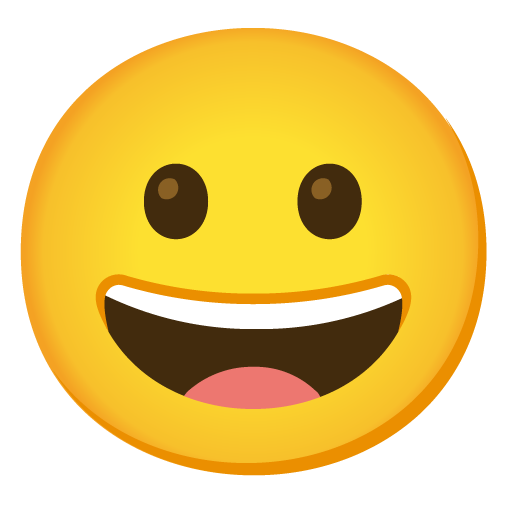
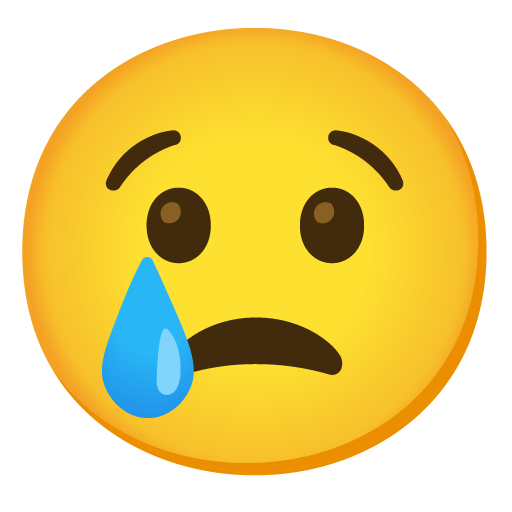
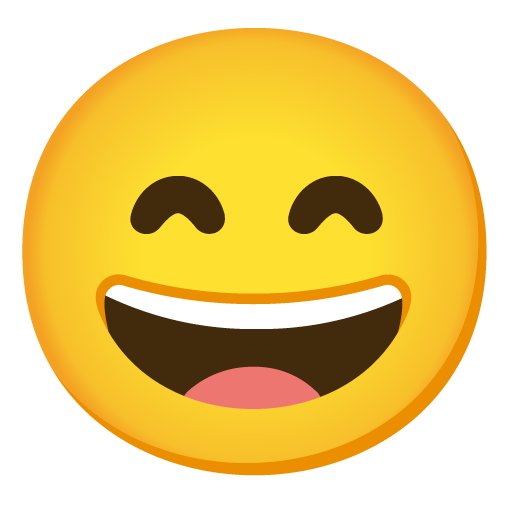
Measures how quickly and accurately people match facial expressions of emotion, against a control of matching shapes. Three emoji faces appear at a time, and participants pick which of the two lower faces shows the same emotion as the top one. The main score is percent correct on the face trials.
Constructs
- Emotion perception
- Facial expression matching
- Threat processing
- Social cognition
Research uses
- Emotion processing research
- Anxiety and depression research
- Companion task for imaging and drug studies
- Within-study group comparison
How the paradigm works
The Emotional Face Matching Task measures how quickly and accurately people match facial expressions of emotion. Hariri, Bookheimer and Mazziotta (2000) asked people to choose which of two faces showed the same expression, angry or afraid, as a target face above them, and Hariri and colleagues (2002) compared matching angry and fearful expressions with matching threatening scenes. Later versions alternate blocks of face matching with blocks of matching simple shapes, a control for seeing, choosing and pressing (Goetz and colleagues, 2014); the Human Connectome Project runs one with 2 second trios (Barch and colleagues, 2013).
More about the paradigm
Here the faces are emoji from Google's Noto Emoji, never photographs: the two angry and two afraid faces of Emoji Emotion Recognition. On each face trio the top face and the matching face are the two different faces of one emotion, and the third face shows the other emotion, so a face is never matched to the same picture. Shape trios show a circle, a tall ellipse and a wide ellipse of equal area, in the yellow of the faces; the match is the same shape. The participant presses the left or right arrow key for the lower picture that matches the top one. Each trio stays on screen for 4 seconds by default (2 to 5 as a setting) whatever the answer, with a 1 second gap, so every block takes the same time; the first key counts. Blocks of 6 trios alternate, starting and ending with shapes: 4 face blocks and 5 shape blocks by default, as in the version Goetz and colleagues (2014) describe, each after a 2 second cue. Practice has one shape block and one face block of 3 trios, with happy and sad faces, and feedback. About 6 minutes. Desktop and laptop only.
The main score is percent correct on the face trios, with missed and early answers counted as errors. The test also reports percent correct on the shape trios, median times to a right answer for faces and shapes, faces minus shapes for both, and accuracy and time for angry and for afraid top faces. Unlike Emoji Emotion Recognition, which asks for the word that names one face's emotion, this task asks for no words: it compares the expressions of two faces under time pressure, against a shape control. Emoji faces carry their emotion partly in color, unlike photographs, so the scores are not interchangeable with those of the photographic task. Scores support research and do not diagnose.
Scores
- Face Accuracy%
- Percent of face trios matched rightly. Missed and early answers are errors.
- Higher is better
- Shape Accuracy%
- Percent of shape trios matched rightly.
- Under 80% is flagged for review
- Median Face Timems
- Median time from a face trio's onset to a right answer.
- Lower is faster
- Median Shape Timems
- Median time from a shape trio's onset to a right answer.
- Lower is faster
- Faces Minus Shapes, Timems
- Median face time minus median shape time.
- Above zero means matching expressions took longer than matching shapes
- Faces Minus Shapes, Accuracy%
- Face accuracy minus shape accuracy.
- Below zero means the faces were harder
- Angry Face Accuracy%
- Percent correct on face trios with an angry top face.
- Higher is better
- Afraid Face Accuracy%
- Percent correct on face trios with an afraid top face.
- Higher is better
- Median Angry Face Timems
- Median time to a right answer on face trios with an angry top face.
- Informational
- Median Afraid Face Timems
- Median time to a right answer on face trios with an afraid top face.
- Informational
- Missed Trioscount
- Trios with no answer while they showed.
- More than 3 and more than 25% of trios invalidates
- Anticipationscount
- Answers under 100 ms, which count as errors.
- More than 2 and more than 20% of trios invalidates
- Trios Shownitems
- Test trios in the scored run.
- Fewer than planned is flagged for review
- Trios Planneditems
- Test trios the run set out to show.
- Informational
Use and evidence
39 papers from 2021 to 2025 name this task in their title or abstract, up 3% compared with 2016 to 2020. That ranks it 272 of 395 test families in our census. See the counts for every test.
Show the numbers
| Year | Papers |
|---|---|
| 2025 | 6 |
| 2024 | 12 |
| 2023 | 7 |
| 2022 | 5 |
| 2021 | 9 |
| 2020 | 8 |
| 2019 | 8 |
| 2018 | 2 |
| 2017 | 13 |
| 2016 | 7 |
| 2015 | 9 |
| 2014 | 9 |
| 2013 | 9 |
| 2012 | 8 |
| 2011 | 6 |
| 2010 | 7 |
| 2009 | 2 |
| 2008 | 3 |
| 2007 | 2 |
| 2006 | 0 |
| 2005 | 0 |
| 2004 | 0 |
| 2003 | 1 |
| 2002 | 0 |
| 2001 | 0 |
| 2000 | 0 |
Use grade D
30 to 99 papers from 2021 to 2025.
Evidence grade C
At least 2 test-retest papers, 30 reliability or validity papers or 3 registered clinical studies.
- Papers on test-retest reliability
- 4
- Papers on reliability or validity
- 7
- Registered clinical studies using it as an outcome
- 7
How the grades work
Use: A is 1,000 or more papers from 2021 to 2025, B 300 to 999, C 100 to 299, D 30 to 99 and E fewer than 30. Evidence: A means at least 25 papers report its test-retest reliability and at least 25 registered clinical studies use it as an outcome; B, at least 8 test-retest papers, and either 5 registered clinical studies or 150 reliability or validity papers; C, at least 2 test-retest papers, 30 reliability or validity papers or 3 registered clinical studies; D, little published measurement evidence found. The counts measure use. They include every paper that names the task in its title or abstract. Grades describe the published research on this task, not ConductCognition's version of it.
Source: ConductCognition test census 0.14.0, counted 2 November 2026 from OpenAlex and ClinicalTrials.gov.
Task design
The trial sequence as the test runs in ConductCognition.
- Faces
- Noto emoji faces, never photographs: the 2 angry and 2 afraid faces of Emoji Emotion Recognition. The top face and the match are the two different faces of one emotion; the third face shows the other emotion.
- Shapes
- A circle, a tall ellipse and a wide ellipse of equal area, in the yellow of the faces, drawn by our code. The match is the same shape as the top one.
- Trio
- One picture at the top and two below it. Press the left or right arrow key for the lower picture that matches the top one. In every block the match is on each side in half the trios.
- Timing
- Each trio stays for 4 seconds by default, 2 to 5 as a setting, whatever the answer, then a 1,000 ms gap. The first key counts.
- Blocks
- Blocks of 6 trios, shapes and faces in turn, starting and ending with shapes: 4 face blocks and 5 shape blocks by default, 2 to 6 face blocks as a setting, each after a 2,000 ms cue. 54 trios by default.
- Practice
- One shape block and one face block of 3 trios each, with happy and sad faces and feedback.
- Score
- Percent correct on the face trios, with missed and early answers as errors; then the shapes, faces minus shapes, and median times to a right answer.
The published task uses photographs of posed expressions. This one uses emoji faces, which carry their emotion partly in color, so its scores are not interchangeable with the photographic task's. It shows faces of Emoji Emotion Recognition, which asks for the word that names one face's emotion; this task asks for no words and compares expressions under time pressure, against a shape control. Run the two in separate sessions to keep the faces new.
Quality checks
Each session is marked valid, needs review or invalid, with the reason, before you see its scores.
Scored rows: emotional_face_matching_test from the scored run, the left or right arrow while each trio shows (chance 50%; the match is on each side in half the trios of every block), faces and shapes together. Below chance invalidates and not above chance is flagged. One key on 90% of answers invalidates when accuracy is not above chance. Missed responses and responses under 100 ms follow the timed-test rule. Under 80% right on the shape trios, or fewer trios than planned, is flagged and withholds the percentile. A hidden tab withholds the percentile.
Why these rules
Accuracy significantly below chance (one-sided exact test, p < .05) cannot come from guessing; it means the response mapping was reversed or the task was not followed (Slick, Sherman and Iverson 1999 treat below-chance forced-choice performance as definite response bias). Chance-level accuracy can be a real result in impaired participants, so it is only flagged. One option on at least 90% of answered trials, when the correct options are balanced and accuracy is not above chance, means the answers did not depend on the items (the task counterpart of long-string responding in surveys; Curran 2016). Missed responses and responses under 100 ms keep the platform's timed-test rule: more than max(3, 25%) missed responses or more than max(2, 20%) responses under 100 ms invalidate, and any is flagged. A response under 100 ms cannot be a reaction to the stimulus. The shape trios ask only to see which shape is the same, which the published versions report as nearly always right, so many errors there suggest the rule was not followed; the 80% limit is a ConductScience choice. A hidden tab lets the study, delay or response timers run without the participant, so a percentile is withheld after one.
Running this test
Settings you can change
| Setting | Standard | Allowed |
|---|---|---|
| Face blocks | 4 | 2 to 6 |
| Time per trio (seconds) | 4 | 2 to 5 |
Yearly plans can change settings within these limits. Free and pay-as-you-go studies use the standard settings.
Need a setting this test does not have?
Devices and languages
- Timed test: participants need a desktop or laptop with a mouse or trackpad. Participant devices
- Languages: English, Spanish, French, German, Italian, Portuguese (Brazil), Chinese (Simplified) and Japanese.
- Available on: Every plan, including the free plan.
- Recruiting online? See the setup guides for Prolific, Sona Systems, CloudResearch Connect and Qualtrics.
Cite and describe
Participants completed the Emotional Face Matching Task in a web browser (ConductCognition task version 1.0.0, scoring version 1.0.0; Hariri AR, Bookheimer SY, Mazziotta JC, 2000; Hariri AR, Tessitore A, Mattay VS, Fera F, Weinberger DR, 2002), with the standard settings (face blocks: 4; time per trio (seconds): 4). The main score was face accuracy (percent of face trios matched rightly).
ConductCognition versions: task version 1.0.0, scoring version 1.0.0. Every export records the versions each session used, for a methods section.
- Hariri, A. R., Bookheimer, S. Y., & Mazziotta, J. C. (2000). Modulating emotional responses: Effects of a neocortical network on the limbic system. NeuroReport, 11(1), 43-48. https://doi.org/10.1097/00001756-200001170-00009Matching the expression of one of two faces, angry or afraid, to a target face above them.
- Hariri, A. R., Tessitore, A., Mattay, V. S., Fera, F., & Weinberger, D. R. (2002). The amygdala response to emotional stimuli: A comparison of faces and scenes. NeuroImage, 17(1), 317-323. https://doi.org/10.1006/nimg.2002.1179Matching angry and fearful expressions, compared with matching threatening scenes.
- Goetz, S. M. M., Tang, L., Thomason, M. E., Diamond, M. P., Hariri, A. R., & Carré, J. M. (2014). Testosterone rapidly increases neural reactivity to threat in healthy men: A novel two-step pharmacological challenge paradigm. Biological Psychiatry, 76(4), 324-331. https://doi.org/10.1016/j.biopsych.2014.01.016Four face blocks between five blocks of matching circles and vertical and horizontal ellipses, six trios of 4 seconds each.
- Barch, D. M., Burgess, G. C., Harms, M. P., Petersen, S. E., Schlaggar, B. L., Corbetta, M., et al. (2013). Function in the human connectome: Task-fMRI and individual differences in behavior. NeuroImage, 80, 169-189. https://doi.org/10.1016/j.neuroimage.2013.05.033Blocks of 6 trios of 2 seconds with a 1 second gap, and accuracy that is very high by design.
Source papers
- Barch DM, Burgess GC, Harms MP, et al. (2013). Function in the human connectome: Task-fMRI and individual differences in behavior. NeuroImage, 80:169-189.Paradigm source, Adults
Questions
How long does the Emotional Face Matching Task take?
About 6 minutes, as listed in the test library.
What device does a participant need?
Timed test: participants need a desktop or laptop with a mouse or trackpad. The browser must be Chrome, Edge, Firefox or Safari.
What scores does it produce?
Face Accuracy, Shape Accuracy, Median Face Time, Median Shape Time, Faces Minus Shapes, Time, Faces Minus Shapes, Accuracy, Angry Face Accuracy, Afraid Face Accuracy, Median Angry Face Time, Median Afraid Face Time, Missed Trios, Anticipations, Trios Shown and Trios Planned. Each session is also marked valid, needs review or invalid, with the reason.
How widely is the Emotional Face Matching Task used in research?
39 papers from 2021 to 2025 name it in their title or abstract, up 3% compared with 2016 to 2020. That ranks it 272 of 395 test families in the ConductCognition test census (use grade D). Source: ConductCognition test census 0.14.0, counted 2 November 2026 from OpenAlex and ClinicalTrials.gov.
How much reliability evidence does the Emotional Face Matching Task have?
In the published research, 4 papers report its test-retest reliability and 7 registered clinical studies use it as an outcome (evidence grade C in the ConductCognition test census).
Which settings can a researcher change?
Face blocks (2 to 6) and time per trio (seconds) (2 to 5). Settings can be changed on yearly plans; free and pay-as-you-go studies use the standard settings.
Which languages can participants use?
Participants can take this test in English, Spanish, French, German, Italian, Portuguese (Brazil), Chinese (Simplified) and Japanese. English is on every plan, and the other languages come with yearly plans. Have a native speaker read the machine-translated text before launch.
Is this a clinical test?
No. ConductCognition is for research use only. It runs, scores and exports the test; clinical interpretation is outside the platform.
Every test: the full test list.
Run this test in your next study
Start free with 10 free participants on any test, then use participant credits or a yearly plan.