Social Cognition
Concealed Information Test
Also called: RT-CIT, reaction time concealed information test, guilty knowledge test
Measure how much slower people answer No to pictures they chose to hide than to pictures they do not know: a reaction-time measure for groups, with no mock crime or personal details.
7-9 minTimed: desktop or laptop with a mouse or trackpad
Free to start: 10 free participants per account, then $0.99 per participant for academic research, or any yearly plan. Preview any test free after you sign up.
- Papers, 2021 to 2025
- 186
- Evidence grade
- C
- Registered clinical studies
- 0



What it measures
Measures how much slower people answer No to pictures they chose to hide than to pictures they do not know. Participants hide one picture of each of four groups, learn four others to answer Yes, then sort every picture with two keys.
Constructs
- Concealed recognition
- Response conflict when denying
- Speeded categorization
Research uses
- Memory detection and deception research at the group level
- Studies of response conflict and cognitive control
- Method studies of reaction-time concealed information tests
How the paradigm works
The Concealed Information Test measures recognition that a person keeps hidden, from how they answer rather than what they answer. In its reaction-time form (Seymour and colleagues, 2000), items appear one at a time and are sorted with two keys. One item is known to the person but must be denied (the probe), other items of the same kind are unknown (irrelevants), and one item is learned beforehand to be answered Yes (the target). Denying a known item takes longer, so slower answers to the probe than to the irrelevants reveal concealed recognition in a group. Studies have taken the probe from a mock crime, from personal details or from a card the person picked (Suchotzki and colleagues, 2017).
More about the paradigm
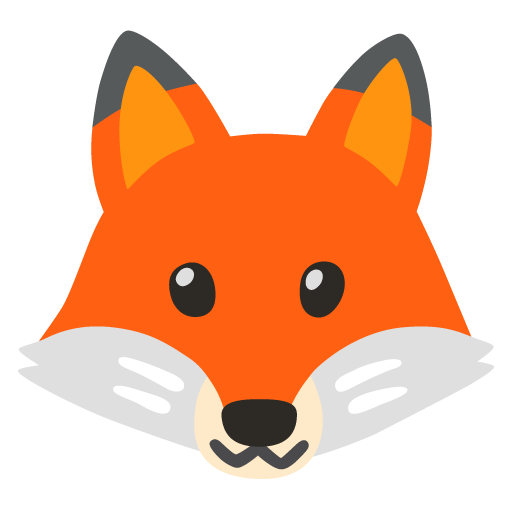
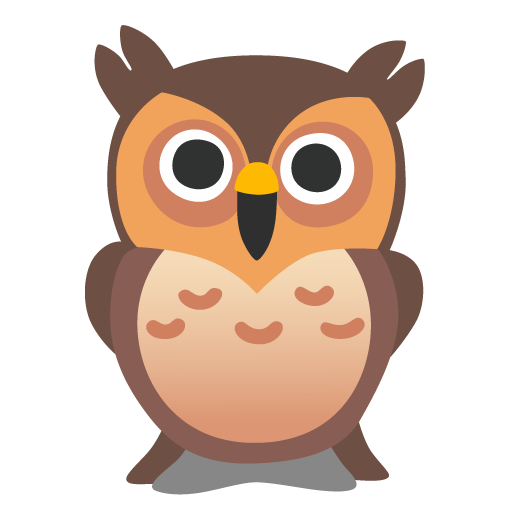
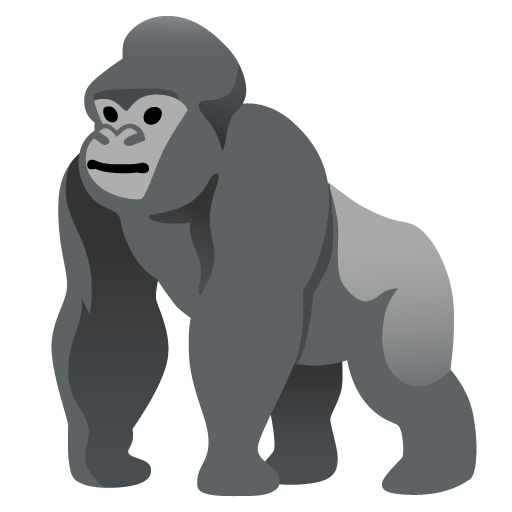
In this version the person makes the choice during the test, so no event or personal detail is needed. From each of four groups of six Noto Emoji pictures (animals, musical instruments, sports things and vehicles) the person chooses one picture to keep hidden, and the session's seed makes one of the other five the picture to learn. Each picture then appears under the question "Do you recognize this picture?", answered with E (Yes) for the four learned pictures and I (No) for every other picture, the hidden ones included, as in Kleinberg and Verschuere (2015). The 24 pictures appear once in each round, 10 rounds as standard (240 trials; 14 or 18 rounds in the settings), in a seeded order with blanks of 250, 500 or 750 ms between pictures. A picture stays until a key or 1,500 ms, "Too slow" appears above it after 800 ms, and a wrong key shows "Wrong" for 200 ms. Three practice parts show every picture once: with no time limit, with the 1,500 ms limit, and with the test's timing. A part is repeated, up to three times, until at least half of all pictures and of the learned pictures are answered right, with a mean answer time of 800 ms or less in the last two parts.
The main score follows Lukács, Kleinberg and Verschuere (2017): the mean time of right answers to the hidden pictures minus that to the irrelevant pictures, counting right answers from 150 to 800 ms. The task also reports this difference over the standard deviation of the irrelevant times (dCIT; Noordraven and Verschuere, 2013), the mean times and error rates of each kind of picture, and the share of trials in the means. Responses under 100 ms count as anticipations. Over 32 reaction-time studies, probes were answered 49 ms slower than irrelevants on average (Suchotzki and colleagues, 2017). A picture chosen minutes earlier may matter less to a person than the details most studies use, so differences here may be smaller.
These are research measures for comparing groups and conditions, not lie detection: one person's difference can arise by chance, and the scores never show that a person concealed anything. Participants know they are hiding pictures they chose, and studies usually explain the purpose of the task afterwards. Scores support research and do not diagnose.
Scores
- Probe Minus Irrelevant RTms
- Mean time of right answers to the hidden pictures minus that to the irrelevant pictures, counting right answers from 150 to 800 ms.
- Positive values mean slower answers to the hidden pictures; compare groups, not one person
- dCITscore
- The probe minus irrelevant difference over the standard deviation of the irrelevant times (Noordraven and Verschuere 2013).
- Positive values mean slower answers to the hidden pictures; compare groups, not one person
- Hidden Picture RTms
- Mean time of right answers to the hidden pictures, from 150 to 800 ms.
- Lower is faster
- Irrelevant Picture RTms
- Mean time of right answers to the pictures neither hidden nor learned, from 150 to 800 ms.
- Lower is faster
- Learned Picture RTms
- Mean time of right answers to the learned pictures, from 150 to 800 ms.
- Lower is faster
- Hidden Picture Errors%
- Share of hidden-picture trials answered with the wrong key or not within 1,500 ms; anticipations left out.
- Half or more invalidates the session
- Irrelevant Picture Errors%
- Share of irrelevant-picture trials answered with the wrong key or not within 1,500 ms; anticipations left out.
- Half or more invalidates the session
- Learned Picture Errors%
- Share of learned-picture trials answered with the wrong key or not within 1,500 ms; anticipations left out.
- Half or more invalidates the session
- Probe Minus Irrelevant Errors%
- The hidden-picture error rate minus the irrelevant-picture error rate.
- Positive values mean more errors on the hidden pictures
- Trials in the Means%
- Share of test trials with a right answer from 150 to 800 ms.
- Under 0.5 invalidates the session
- Missed Responsescount
- Test trials with no key within 1,500 ms.
- Quality check
- Anticipationscount
- Keys pressed within 100 ms of a picture.
- Quality check
- Practice Passedflag
- 1 when every practice part was passed within three attempts, 0 when one was not.
- 0 is flagged for review
- Scored Trialstrials
- Test trials of the scored run.
- Quality check
Use and evidence
186 papers from 2021 to 2025 name this task in their title or abstract, down 16% compared with 2016 to 2020. That ranks it 130 of 395 test families in our census. See the counts for every test.
Show the numbers
| Year | Papers |
|---|---|
| 2025 | 51 |
| 2024 | 36 |
| 2023 | 32 |
| 2022 | 33 |
| 2021 | 34 |
| 2020 | 49 |
| 2019 | 54 |
| 2018 | 52 |
| 2017 | 43 |
| 2016 | 24 |
| 2015 | 37 |
| 2014 | 57 |
| 2013 | 32 |
| 2012 | 36 |
| 2011 | 50 |
| 2010 | 37 |
| 2009 | 27 |
| 2008 | 24 |
| 2007 | 9 |
| 2006 | 18 |
| 2005 | 4 |
| 2004 | 5 |
| 2003 | 16 |
| 2002 | 9 |
| 2001 | 6 |
| 2000 | 4 |
Use grade C
100 to 299 papers from 2021 to 2025.
Evidence grade C
At least 2 test-retest papers, 30 reliability or validity papers or 3 registered clinical studies.
- Papers on test-retest reliability
- 0
- Papers on reliability or validity
- 160
- Registered clinical studies using it as an outcome
- 0
Note on the counts: most counted papers measure skin conductance or brain signals.
How the grades work
Use: A is 1,000 or more papers from 2021 to 2025, B 300 to 999, C 100 to 299, D 30 to 99 and E fewer than 30. Evidence: A means at least 25 papers report its test-retest reliability and at least 25 registered clinical studies use it as an outcome; B, at least 8 test-retest papers, and either 5 registered clinical studies or 150 reliability or validity papers; C, at least 2 test-retest papers, 30 reliability or validity papers or 3 registered clinical studies; D, little published measurement evidence found. The counts measure use. They include every paper that names the task in its title or abstract. Grades describe the published research on this task, not ConductCognition's version of it.
Source: ConductCognition test census 0.14.0, counted 2 November 2026 from OpenAlex and ClinicalTrials.gov.
Task design
The trial sequence as the test runs in ConductCognition.
- Pictures
- Noto Emoji pictures, 6 each of animals, musical instruments, sports things and vehicles.
- Choices
- The participant hides 1 picture of each group (the probes), and the seed makes 1 of the other 5 the picture to learn (the target). The other 4 of each group are irrelevants.
- Answers
- E (Yes) for the 4 learned pictures and I (No) for the other 20, the hidden ones included, under the question "Do you recognize this picture?"
- Trials
- Each picture once per round, 10 rounds (standard; 10, 14 or 18): 240 trials, each after a blank of 250, 500 or 750 ms.
- Timing
- A picture stays until a key or 1,500 ms; "Too slow" appears after 800 ms, and "Wrong" for 200 ms after a wrong key.
- Practice
- 3 parts that show every picture once: untimed, then 1,500 ms, then the test's timing. A part not passed is repeated, up to 3 attempts.
- Scoring
- Right answers from 150 to 800 ms: the probes' mean minus the irrelevants' mean, and dCIT. Half or more errors on any kind of picture invalidates.
Studies usually take the probe from a mock crime or personal details. Here the participant chooses it during the test, as in the card test, so differences may be smaller. Results compare groups and never show that one person concealed anything, and studies usually explain the task afterwards.
Quality checks
Each session is marked valid, needs review or invalid, with the reason, before you see its scores.
Scored rows: every concealed_information_trial of the scored run, E (Yes) for the 4 learned pictures and I (No) for the 20 others, the 4 hidden ones included. One trial in six calls for Yes, so accuracy is not judged against chance and a single key is not checked; the target error rate catches a person who presses No throughout. A trial with no key within 1,500 ms is a missed response. Missed responses and responses under 100 ms follow the timed-test rule. Errors (wrong keys and missed answers) on half or more of the hidden, the learned or the other pictures invalidate, and so do fewer than half the trials with a right answer between 150 and 800 ms. A practice part not passed in 3 attempts is flagged and withholds the percentile.
Why these rules
Missed responses and responses under 100 ms keep the platform's timed-test rule: more than max(3, 25%) missed responses or more than max(2, 20%) responses under 100 ms invalidate, and any is flagged. A response under 100 ms cannot be a reaction to the stimulus. Kleinberg and Verschuere (2015) and Lukács, Kleinberg and Verschuere (2017) set aside sessions with half or more errors on any kind of item, because the probe-irrelevant difference needs every kind sorted as instructed, and sessions where under half the trials were right answers between 150 and 800 ms, the times their means use.
No percentile. Scores and quality flags only.
Running this test
Settings you can change
| Setting | Standard | Allowed |
|---|---|---|
| Showings of each picture | 10 (standard) | 10 (standard), 14, 18 |
Yearly plans can change settings within these limits. Free and pay-as-you-go studies use the standard settings.
Need a setting this test does not have?
Devices and languages
- Timed test: participants need a desktop or laptop with a mouse or trackpad. Participant devices
- Languages: English, Spanish, French, German, Italian, Portuguese (Brazil), Chinese (Simplified) and Japanese.
- Available on: Every plan, including the free plan.
- No percentile. Scores and quality flags only. How norms work
- Recruiting online? See the setup guides for Prolific, Sona Systems, CloudResearch Connect and Qualtrics.
Cite and describe
Participants completed the Concealed Information Test in a web browser (ConductCognition task version 1.0.0, scoring version 1.0.0; Seymour et al., 2000; Kleinberg & Verschuere, 2015; Lukács et al., 2017), with the standard settings (showings of each picture: 10). The main score was probe minus irrelevant RT (mean time of right answers to the hidden pictures minus that to the irrelevant pictures, counting right answers from 150 to 800 ms).
ConductCognition versions: task version 1.0.0, scoring version 1.0.0. Every export records the versions each session used, for a methods section.
- Seymour, T. L., Seifert, C. M., Shafto, M. G., & Mosmann, A. L. (2000). Using response time measures to assess "guilty knowledge". Journal of Applied Psychology, 85(1), 30-37. https://doi.org/10.1037/0021-9010.85.1.30
- Kleinberg, B., & Verschuere, B. (2015). Memory detection 2.0: The first web-based memory detection test. PLoS ONE, 10(4), e0118715. https://doi.org/10.1371/journal.pone.0118715The web version's keys, timing and practice.
- Lukács, G., Kleinberg, B., & Verschuere, B. (2017). Familiarity-related fillers improve the validity of reaction time-based memory detection. Journal of Applied Research in Memory and Cognition, 6(3), 295-305. https://doi.org/10.1016/j.jarmac.2017.01.013The scoring rules.
- Suchotzki, K., Verschuere, B., Van Bockstaele, B., Ben-Shakhar, G., & Crombez, G. (2017). Lying takes time: A meta-analysis on reaction time measures of deception. Psychological Bulletin, 143(4), 428-453. https://doi.org/10.1037/bul0000087
Source papers
- Suchotzki K, Verschuere B, Van Bockstaele B, Ben-Shakhar G, Crombez G (2017). Lying takes time: A meta-analysis on reaction time measures of deception. Psychological Bulletin, 143(4):428-453.Paradigm source, Adults
- Lukács G, Kleinberg B, Verschuere B (2017). Familiarity-related fillers improve the validity of reaction time-based memory detection. Journal of Applied Research in Memory and Cognition, 6(3):295-305.Paradigm source, Adults
- No normative data for this task.Paradigm source, N/A
Questions
How long does the Concealed Information Test take?
About 7 to 9 minutes, as listed in the test library.
What device does a participant need?
Timed test: participants need a desktop or laptop with a mouse or trackpad. The browser must be Chrome, Edge, Firefox or Safari.
What scores does it produce?
Probe Minus Irrelevant RT, dCIT, Hidden Picture RT, Irrelevant Picture RT, Learned Picture RT, Hidden Picture Errors, Irrelevant Picture Errors, Learned Picture Errors, Probe Minus Irrelevant Errors, Trials in the Means, Missed Responses, Anticipations, Practice Passed and Scored Trials. Each session is also marked valid, needs review or invalid, with the reason.
How widely is the Concealed Information Test used in research?
186 papers from 2021 to 2025 name it in their title or abstract, down 16% compared with 2016 to 2020. That ranks it 130 of 395 test families in the ConductCognition test census (use grade C). Source: ConductCognition test census 0.14.0, counted 2 November 2026 from OpenAlex and ClinicalTrials.gov.
How much reliability evidence does the Concealed Information Test have?
In the published research, 0 papers report its test-retest reliability and 0 registered clinical studies use it as an outcome (evidence grade C in the ConductCognition test census).
Does it report a percentile?
No. Scores and quality flags only.
Which settings can a researcher change?
Showings of each picture (10 (standard), 14, 18). Settings can be changed on yearly plans; free and pay-as-you-go studies use the standard settings.
Which languages can participants use?
Participants can take this test in English, Spanish, French, German, Italian, Portuguese (Brazil), Chinese (Simplified) and Japanese. English is on every plan, and the other languages come with yearly plans. Have a native speaker read the machine-translated text before launch.
Is this a clinical test?
No. ConductCognition is for research use only. It runs, scores and exports the test; clinical interpretation is outside the platform.
Every test: the full test list.
Run this test in your next study
Start free with 10 free participants on any test, then use participant credits or a yearly plan.